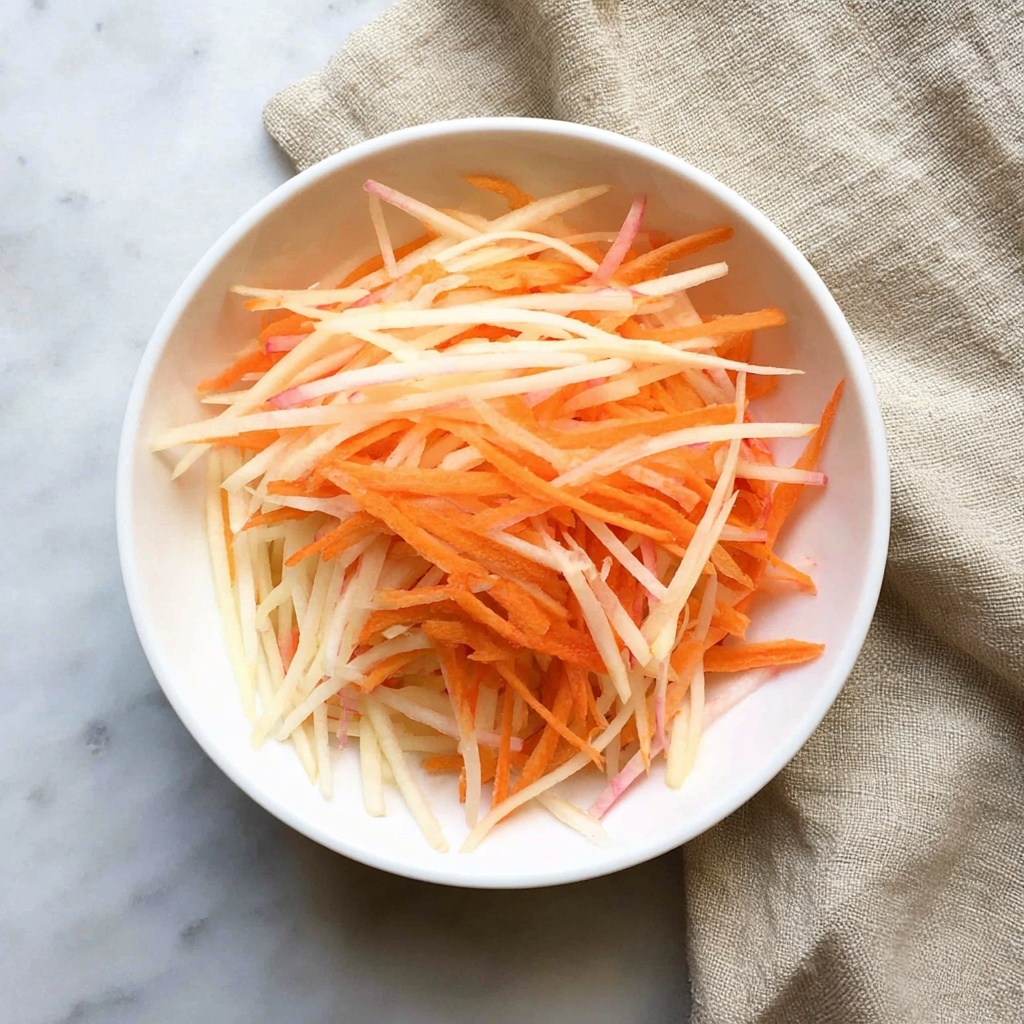
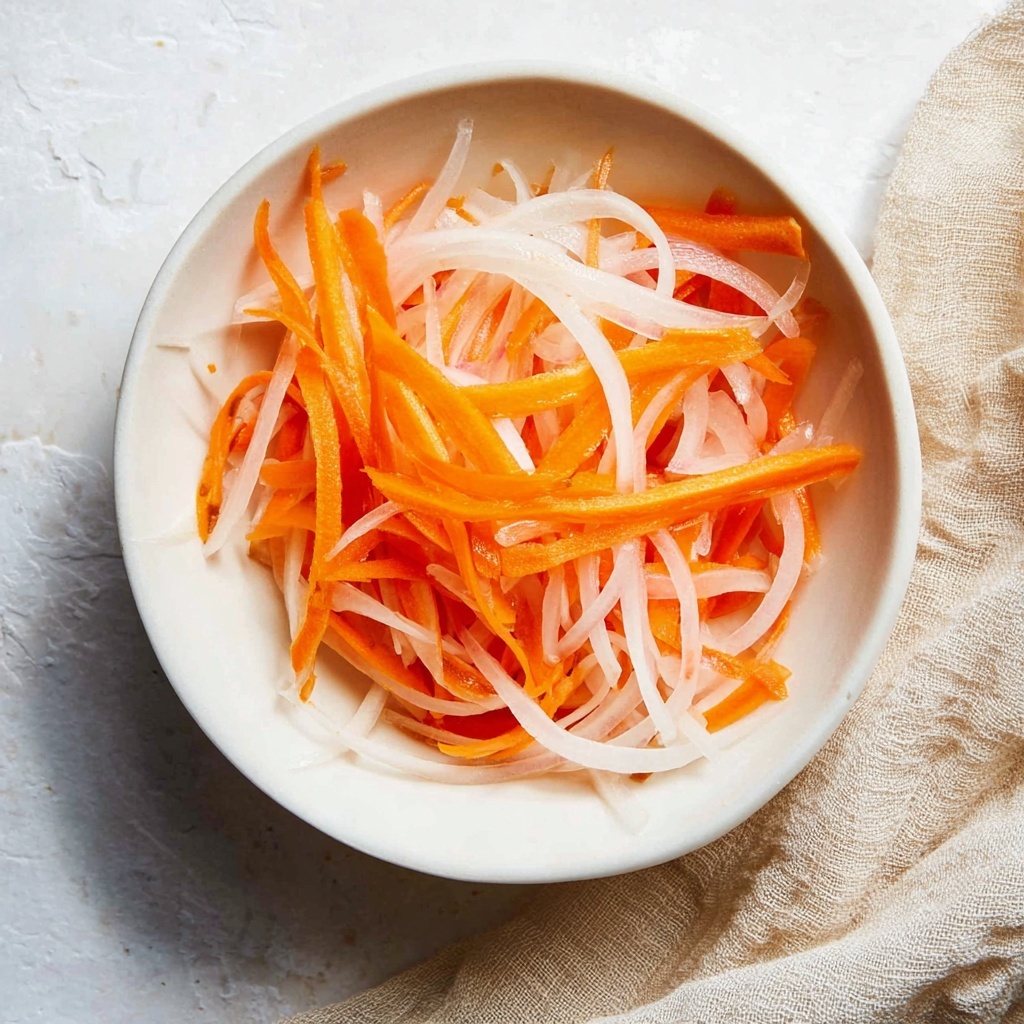
If you’re looking to brighten up any meal with a crisp, tangy punch, this Vietnamese Pickled Carrots and Daikon Radish Recipe is an absolute game-changer. The vibrant orange and white batons soak up a perfectly balanced blend of sweet, salty, and vinegary flavors that awaken your taste buds with every bite. This classic pickle adds a refreshing crunch that pairs beautifully with rich dishes or can simply be enjoyed on its own as a lively snack. Once you try this recipe, you’ll wonder how you ever lived without this essential Vietnamese side in your culinary repertoire.
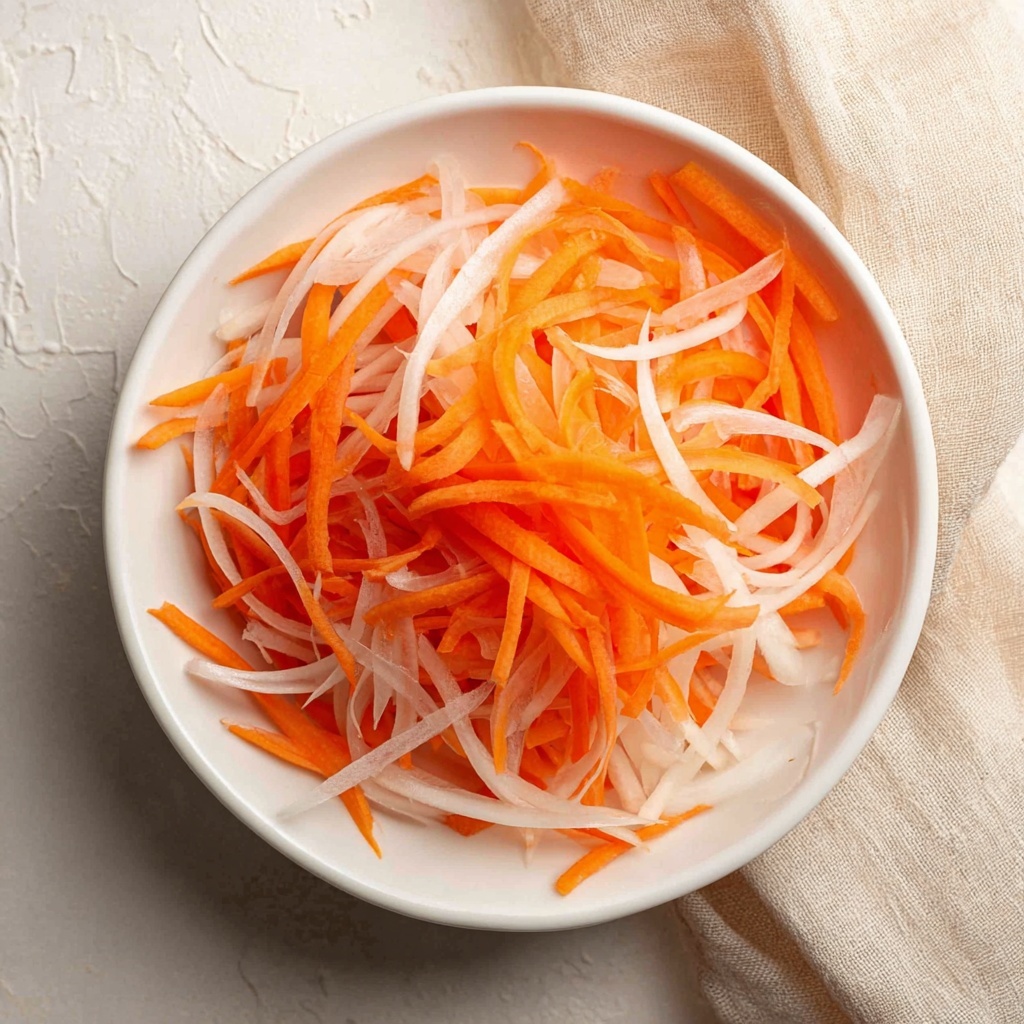
Ingredients You’ll Need
These ingredients are wonderfully simple yet so essential; each one plays a crucial role in delivering the bright, clean flavors and perfect texture that define this Vietnamese Pickled Carrots and Daikon Radish Recipe. From the natural sweetness of the carrots to the zing of rice wine vinegar, everything comes together effortlessly.
- Carrots: Use medium-sized, peeled carrots cut into thin 3mm batons for the ideal crunch and color.
- Daikon (white radish): This mild, slightly sweet radish should be peeled and cut to match the carrots for uniform pickling.
- Boiling water: Hot water dissolves salt and sugar quickly, ensuring a smooth pickling liquid.
- White sugar: Adds the perfect touch of sweetness to balance the vinegar’s acidity.
- Cooking or kosher salt: Essential for drawing out moisture and enhancing flavor throughout the vegetables.
- Rice wine vinegar: The star acidic component, imparting that classic, bright tang, though apple cider vinegar can be substituted if needed.
How to Make Vietnamese Pickled Carrots and Daikon Radish Recipe
Step 1: Prepare the Pickling Liquid and Vegetables
Start by dissolving the salt and sugar in a large bowl filled with boiling water. This ensures your sweet and salty elements meld perfectly, creating the essential base for your pickled vegetables. Next, stir in the rice wine vinegar, which adds that unmistakable tangy brightness. Now, add your prepped carrots and daikon—batons sliced to about 3mm thickness—ensuring they are just about submerged in the liquid. This is where the magic begins, as the veggies start soaking up all those vibrant flavors.
Step 2: Let the Veggies Pickle
Once everything is combined, let the bowl stand at room temperature for about 2 hours. During this time, the carrots and daikon will become slightly floppy, the perfect texture for eating—crisp yet tender. This step is key to developing that authentic, delightful crunch with a mellow acidity balancing out every bite.
Step 3: Drain and Use
When you’re ready to use the pickled carrots and daikon, simply drain them well. You don’t want the pickling liquid diluting your dish, so just take out the vegetables themselves. Whether you’re topping a banh mi sandwich, adding a zesty crunch to salads, or pairing with grilled meats, this step preps your pickles perfectly for immediate use.
Step 4: Store to Keep Fresh
If you’re not using them all at once, no worries! Transfer the pickled vegetables along with their pickling liquid into airtight glass containers or jars—avoid plastic as it can affect the flavor and storage quality. They’ll happily keep fresh in the refrigerator for up to 2 months, making this a perfect make-ahead condiment.
How to Serve Vietnamese Pickled Carrots and Daikon Radish Recipe
Garnishes
This pickle is a fantastic garnish that livens up so many dishes. Sprinkle a few pickled carrots and daikon batons over Vietnamese cold noodles, grilled pork dishes, or even rice bowls to add a bright and appetizing contrast. Their crisp texture and sharp flavor are a simple way to elevate any plate.
Side Dishes
Serve this Vietnamese Pickled Carrots and Daikon Radish Recipe alongside rich and savory mains like grilled meats, fried spring rolls, or steamed buns. It adds a refreshing bite that cuts through heavier flavors, balancing your meal and keeping your palate happy and refreshed throughout.
Creative Ways to Present
Think beyond just a side or garnish! Try layering these pickles in banh mi sandwiches for an authentic Vietnamese experience or toss them into vibrant summer rolls for that extra crunch. You can even chop and mix them into a zingy slaw or use them as a topping on tacos to fuse Vietnamese flair with your favorite cuisines.
Make Ahead and Storage
Storing Leftovers
Leftover pickled carrots and daikon keep marvelously well. Store them submerged in their pickling liquid inside a clean, airtight glass container in the fridge. This not only preserves their crispness but also continues to develop their flavors. They can last up to 2 months, making them a handy staple to have on hand.
Freezing
Freezing is generally not recommended for this Vietnamese Pickled Carrots and Daikon Radish Recipe. The freezing process can break down the crisp texture and cause the vegetables to become mushy once thawed, which takes away from the fresh crunch that makes this pickle so delightful.
Reheating
Since these pickled veggies are best enjoyed cold or at room temperature, reheating is not necessary. They shine brightest as a crisp, refreshing counterpoint to warm dishes, so simply remove from the fridge and use directly.
FAQs
Can I use apple cider vinegar instead of rice wine vinegar?
Absolutely! Apple cider vinegar is a fine substitute in this Vietnamese Pickled Carrots and Daikon Radish Recipe. It will impart a slightly different flavor profile but still maintain that essential tanginess that makes the pickles so vibrant.
How long do the pickled carrots and daikon keep in the fridge?
Your pickled vegetables can stay fresh for up to 2 months when stored properly in an airtight jar with their pickling liquid. Just keep them refrigerated and use clean utensils to avoid contamination.
Why should the carrots and daikon be cut into batons?
Cutting into thin batons ensures the vegetables pickle evenly and quickly. This shape provides the perfect balance of crispy texture and surface area for the pickling liquid to soak in, giving you a delicious, consistent flavor throughout.
Can I make this recipe without sugar?
The sugar plays an important balancing role by softening the vinegar’s acidity and enhancing the overall flavor. If you try to omit it, the pickles might taste too sharp or overly sour. You could experiment with a sugar substitute but expect a different flavor outcome.
What dishes pair best with Vietnamese pickled carrots and daikon?
These pickles are most famously paired with banh mi sandwiches but are also incredible alongside grilled meats, rice bowls, spring rolls, and noodle salads. They add brightness and texture that complements many dishes wonderfully.
Final Thoughts
There’s something truly magical about this Vietnamese Pickled Carrots and Daikon Radish Recipe—a perfect harmony of simple ingredients coming together to create a bright, crunchy, and versatile condiment that livens up any meal. Once you get this recipe into your kitchen rotation, you’ll find yourself reaching for it again and again to add that extra layer of flavor and freshness. Give it a try, and I promise it’ll become one of your favorite go-to pickles!
Print
Vietnamese Pickled Carrots and Daikon Radish Recipe
- Prep Time: 15 minutes
- Cook Time: 0 minutes
- Total Time: 2 hours 15 minutes
- Yield: 4.4 cups
- Category: Condiment
- Method: No-Cook
- Cuisine: Vietnamese
- Diet: Gluten Free
Description
A classic Vietnamese pickled carrots and daikon recipe that delivers the perfect balance of sweet, tangy, and salty flavors. These crunchy, colorful vegetables add a refreshing bite to banh mi sandwiches, salads, and spring rolls. Quick and easy to prepare, they require just a short marinating time to develop their signature slightly floppy texture.
Ingredients
Vegetables
- 2 medium carrots, peeled and cut into 3mm (1/10″) batons
- 1/2 large daikon (white radish), peeled and cut into 3mm (1/10″) batons
Pickling Liquid
- 1 1/2 cups boiling water
- 1/2 cup white sugar
- 4 tsp cooking or kosher salt
- 3/4 cup rice wine vinegar (can substitute apple cider vinegar)
Instructions
- Prepare the pickling liquid: In a large bowl, dissolve the salt and sugar in the boiling water. Stir well to ensure everything is fully dissolved. Add the rice wine vinegar and mix to combine the pickling liquid.
- Add vegetables: Place the cut carrots and daikon into the bowl with the pickling liquid. Make sure they are just about covered by the liquid to ensure even pickling.
- Marinate: Let the vegetables sit at room temperature for about 2 hours. During this time, they will soften slightly, becoming tender yet still crisp with a slightly floppy texture.
- Drain and use: When ready to serve, drain the vegetables well from the pickling liquid. Use them as a fresh and tangy condiment in sandwiches, salads, or other dishes.
- Storage: Store the pickled carrots and daikon in an airtight glass container or jar with the pickling liquid in the refrigerator. They will keep well for up to 2 months. Avoid using plastic containers for long-term storage to preserve freshness.
Notes
- Cut vegetables into thin, uniform batons (approx. 3mm) for consistent pickling and texture.
- Rice wine vinegar provides a mild sweetness ideal for Vietnamese pickles but apple cider vinegar is a good substitute.
- Ensure vegetables are fully submerged in pickling liquid to prevent spoilage.
- Use airtight glass jars rather than plastic to maintain the best flavor and longevity for storage.
- The pickled vegetables make a fantastic accompaniment to Vietnamese dishes like banh mi, vermicelli bowls, and spring rolls.