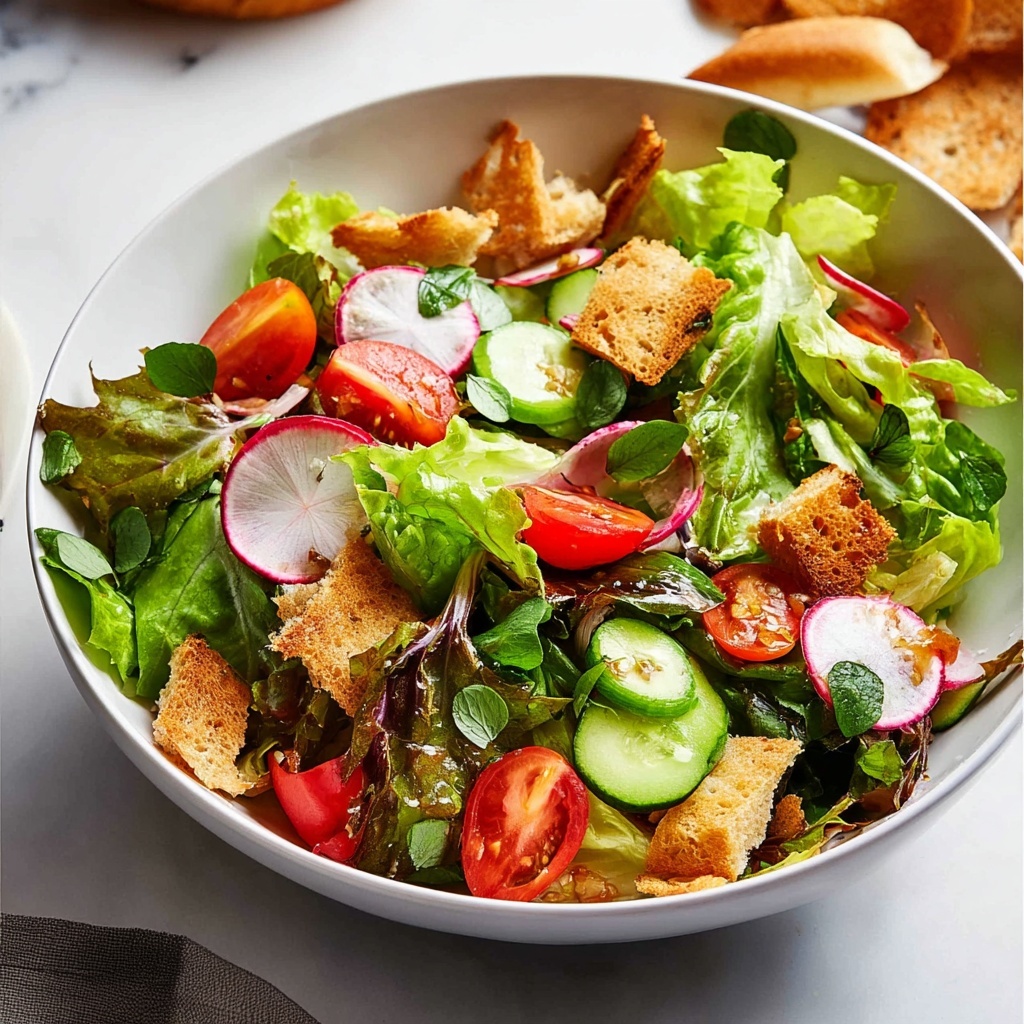
If you’ve never tried Lebanese Fattoush Recipe, you are in for a treat that’s as vibrant and refreshing as it is satisfying. This traditional salad from Lebanon beautifully combines crisp greens, tangy pomegranate molasses, and toasted pita bread to create a symphony of textures and flavors. Every bite bursts with freshness thanks to the combination of romaine lettuce, cucumbers, radishes, and fresh herbs, while the zesty dressing laced with sumac brings a unique tartness that keeps you coming back for more. Whether you want a light lunch, a colorful side, or a crowd-pleasing starter, this Lebanese Fattoush Recipe offers a perfect balance of simplicity and tradition that feels like a warm hug from the Mediterranean.
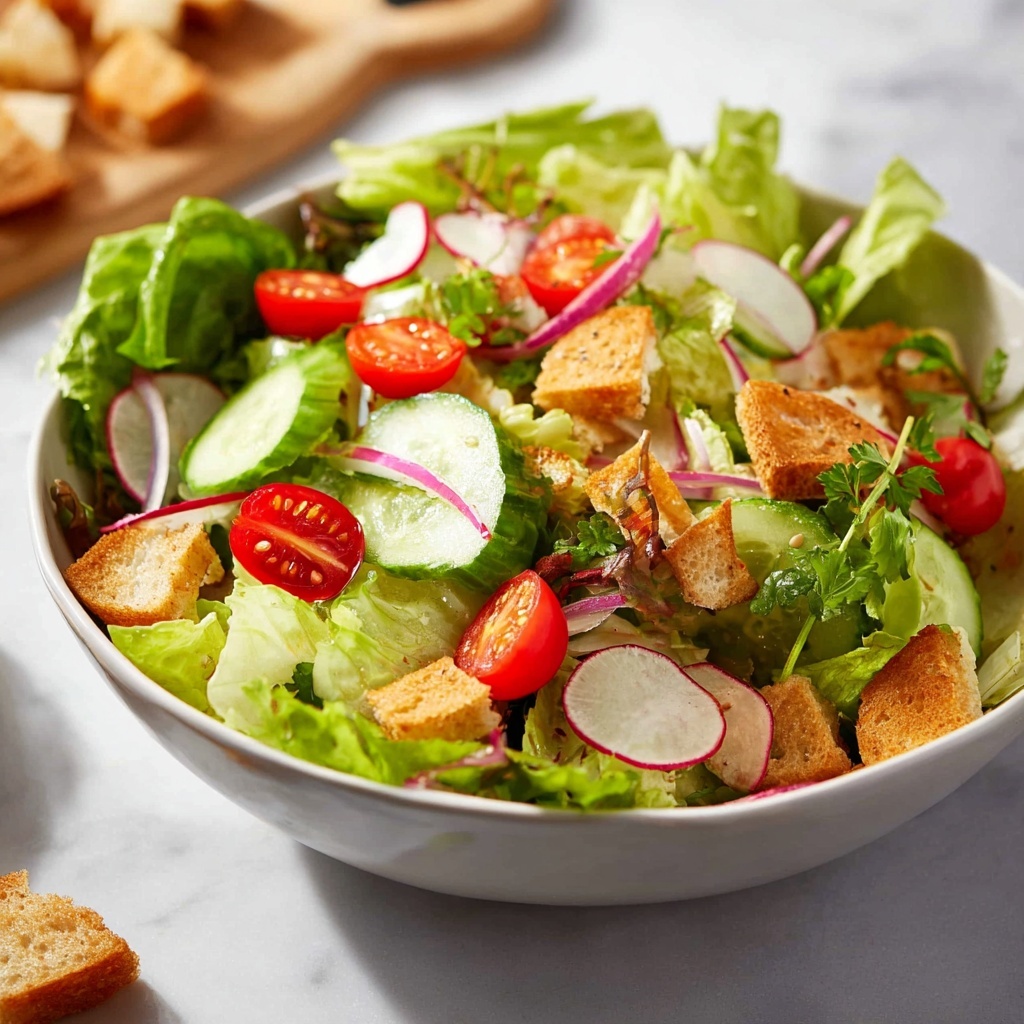
Ingredients You’ll Need
These ingredients might seem straightforward, but each plays a crucial role in bringing out the essence of Lebanese Fattoush Recipe. The fresh vegetables deliver crunch and brightness, while the herbs add aromatic charm. The toasted pita gives a delightful contrast in texture, and the dressing is where all the magic happens — tying everything together with its lively flavors.
- Pita bread or Lebanese bread: Toasted for crunch and to soak up the dressing without getting soggy.
- Olive oil: Adds smooth richness and helps crisp up the pita.
- Cooking salt or kosher salt: Enhances the natural flavors of the fresh veggies and balances the dressing.
- Cos or romaine lettuce: The crisp base that provides a refreshing, leafy bite.
- Lebanese cucumbers: Thinly sliced for coolness and a clean, watery crunch.
- Cherry tomatoes: Sweet and juicy, they add bursts of color and flavor.
- Red onion: Thin slices introduce a subtle sharpness without overpowering the salad.
- Red radishes: Finely sliced for peppery crunch and vivid color contrast.
- Mint leaves: Fresh and fragrant, they add a sweet, cooling herbal note.
- Parsley: Brings a slight earthiness and bright green freshness.
- Extra virgin olive oil: For the dressing — a fruity, luscious base.
- Lemon juice: Adds bright acidity that lifts the whole salad.
- Pomegranate molasses: Sweet-tart syrup that is the hallmark of authentic fattoush dressing.
- Garlic clove: Finely grated for a subtle pungent kick in the dressing.
- Sumac: A tangy spice that gives fattoush its signature zesty, slightly sour flavor.
How to Make Lebanese Fattoush Recipe
Step 1: Prepare and Toast the Bread
Start by preheating your oven to 375°F (190°C). Cut the pita bread into bite-sized pieces or strips — this is what will add a crunchy texture that contrasts beautifully with the fresh vegetables. Toss the pieces in 2 tablespoons of olive oil and sprinkle lightly with 1/4 teaspoon salt. Spread them out on a baking tray in a single layer and toast for about 10 minutes or until golden and crisp. This simple toasting process not only gives texture but also infuses a subtle savory flavor that makes the salad pop.
Step 2: Wash and Chop the Vegetables
While the bread is toasting, rinse the romaine lettuce thoroughly and cut it into large bite-sized pieces. Thinly slice the Lebanese cucumbers into rounds about 3 millimeters thick, halve the cherry tomatoes, and thinly slice the red onion and radishes. These fresh veggies provide the foundation of fattoush, offering a refreshing crunch and a mixture of sweet, peppery, and slightly sharp flavors that balance each other beautifully.
Step 3: Mix the Dressing
In a small bowl, whisk together 1/4 cup of extra virgin olive oil, 2 tablespoons of lemon juice, 2 teaspoons of pomegranate molasses, finely grated garlic, 1 teaspoon of sumac, and 1/2 teaspoon of salt. This vibrant dressing captures the essence of Lebanese Fattoush Recipe — tangy, sweet, and slightly fragrant with sumac that brightens every bite. Taste and adjust if needed, as the balance of acidity and sweetness is key for authentic flavor.
Step 4: Combine and Toss Everything Together
In a large salad bowl, add the lettuce, cucumbers, cherry tomatoes, onions, radishes, torn mint leaves, and roughly chopped parsley. Pour the dressing over the salad and toss gently but thoroughly, making sure every leaf and slice is coated in that luscious dressing. Finally, add the toasted pita pieces just before serving to keep their crunch intact. Mixing at this stage is crucial—it ensures that the warm, crispy pita soaks up some dressing without becoming soggy.
How to Serve Lebanese Fattoush Recipe
Garnishes
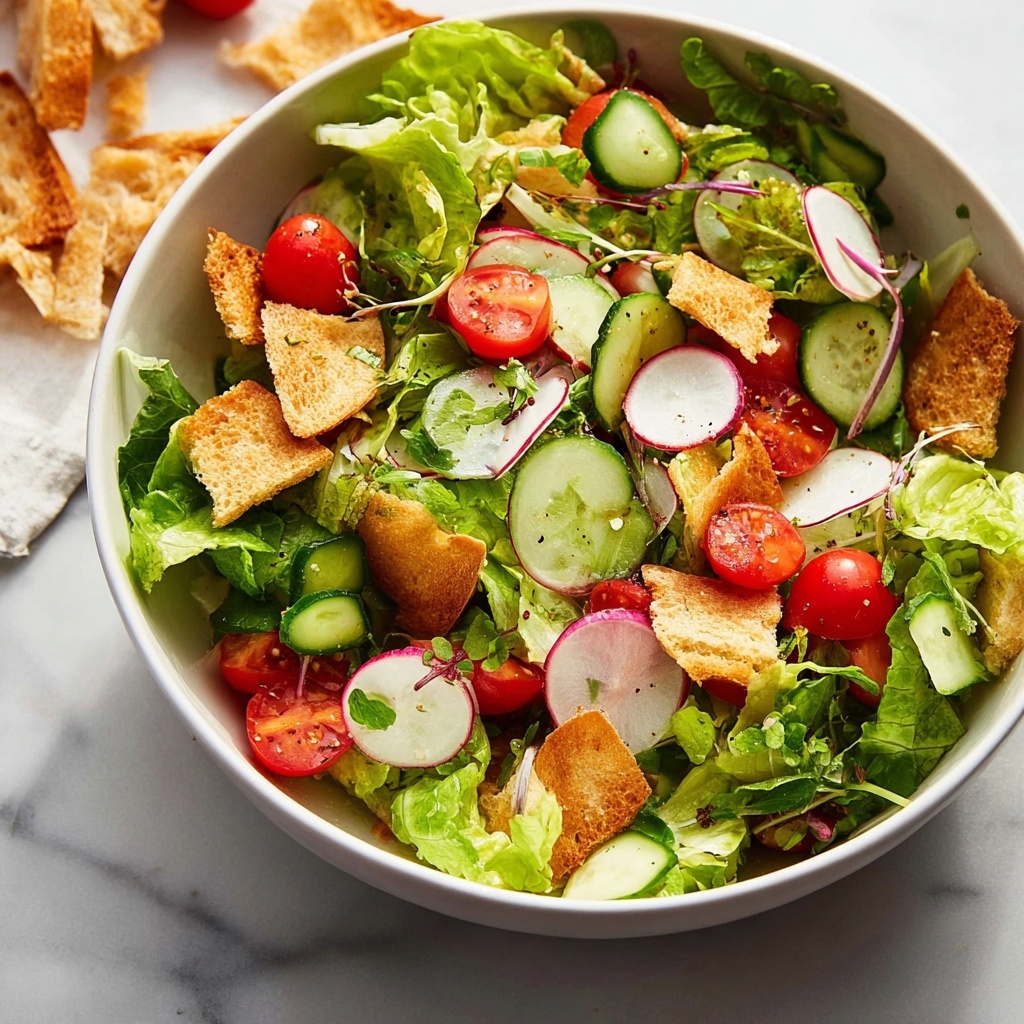
For an extra pop of color and flavor, sprinkle a bit more sumac or some pomegranate seeds on top before serving. A few whole mint or parsley leaves can add a fresh herbal burst that looks as good as it tastes. These garnishes elevate the salad’s presentation, making it instantly inviting and delicious.
Side Dishes
Lebanese Fattoush Recipe pairs beautifully with grilled meats like lamb or chicken, roasted vegetables, or even as a bright counterbalance to rich dishes like hummus and baba ganoush. Serve it alongside warm flatbreads and a tangy yogurt dip for a Middle Eastern feast that will delight any foodie.
Creative Ways to Present
If you want to dress up your fattoush for guests, try serving it in individual bowls lined with whole mint leaves or edible flowers for a garden-fresh look. Another fun idea is to layer the ingredients in a clear glass trifle bowl so the vibrant colors show through, tempting everyone to dig in. Finally, using colorful heirloom cherry tomatoes or radishes can add unexpected visual interest.
Make Ahead and Storage
Storing Leftovers
If you have any leftovers, keep the salad and toasted pita separated in airtight containers. This will help the bread stay crunchy while the salad remains fresh. Stored properly, the salad can last up to 2 days in the refrigerator, but it’s best enjoyed fresh for maximum flavor and texture.
Freezing
Due to the fresh vegetables and delicate dressing, freezing Lebanese Fattoush Recipe is not recommended. The texture of the greens and cucumbers will suffer and become soggy once thawed, which significantly impacts the overall experience of this crisp salad.
Reheating
Since fattoush is a fresh, cold salad, reheating is unnecessary and not advised. However, if you want to warm the toasted pita pieces to refresh their crispness, a quick 5-minute toast in the oven at 350°F (175°C) will bring them back to life, making every bite satisfyingly crunchy again.
FAQs
Can I make Lebanese Fattoush Recipe vegan?
Absolutely! Lebanese Fattoush Recipe is naturally vegan, as it consists entirely of vegetables, herbs, and a simple dressing without any animal products. It’s a perfect plant-based dish.
What can I substitute if I don’t have pomegranate molasses?
If you can’t find pomegranate molasses, a mixture of lemon juice and a little honey or maple syrup works as a good substitute. The goal is to replicate that unique sweet-tart balance that molasses provides.
Is sumac necessary for fattoush?
Sumac adds a distinctive tangy flavor that is iconic to fattoush, but if you don’t have any, the salad is still delicious. You can increase the lemon juice slightly to compensate for some acidity, but using sumac is definitely worth it for authenticity.
Can I add other vegetables to fattoush?
Yes! Fattoush is versatile. Feel free to add bell peppers, green onions, or even some shredded carrots to add more color and crunch. Just keep the balance of fresh and crisp textures.
How do I keep the bread from getting soggy?
Toast the pita bread until crisp and only add it to the salad just before serving. Keeping the toasted bread and salad separate until the last moment is the best way to ensure it stays crunchy.
Final Thoughts
I can’t recommend enough that you try the Lebanese Fattoush Recipe at home. It’s a celebration of fresh ingredients and bold, bright flavors that make every bite exciting and joyful. Whether you’re new to Middle Eastern cuisine or a seasoned fan, this salad is a simple, satisfying way to bring some sunshine to your table. Enjoy every crunchy, tangy mouthful!
Print
Lebanese Fattoush Recipe
- Prep Time: 10 minutes
- Cook Time: 12 minutes
- Total Time: 22 minutes
- Yield: 5.5 – 6 people
- Category: Salad
- Method: Baking
- Cuisine: Lebanese
- Diet: Vegetarian
Description
A refreshing and vibrant Lebanese Fattoush salad featuring crispy toasted pita bread, fresh vegetables like cucumbers, tomatoes, radishes, and romaine lettuce, dressed with a tangy lemon and pomegranate molasses dressing infused with sumac and garlic. Perfect as a light appetizer or side dish with Middle Eastern meals.
Ingredients
Bread
- 2 pita bread or 1 Lebanese bread
- 2 tbsp olive oil
- 1/4 tsp cooking salt / kosher salt
Vegetables
- 5 cups cos/romaine lettuce, cut into large bite size pieces
- 2 Lebanese cucumbers, thinly sliced into 3mm rounds
- 1 cup cherry tomatoes, halved (~200g) or 1 1/2 regular tomatoes cut into large chunks
- 1/2 small red onion, thinly sliced
- 5 red radish, finely sliced
- 1/2 cup mint leaves, lightly packed (large ones torn in half)
- 1 tbsp roughly chopped parsley
Dressing
- 1/4 cup extra virgin olive oil
- 2 tbsp lemon juice
- 2 tsp pomegranate molasses
- 1 medium garlic clove, finely grated or crushed using garlic crusher
- 1 tsp sumac (optional but recommended)
- 1/2 tsp cooking salt / kosher salt
Instructions
- Prepare the bread: Preheat your oven to 375°F (190°C). Cut the pita or Lebanese bread into bite-sized pieces or strips. Toss the bread pieces with 2 tablespoons of olive oil and 1/4 teaspoon salt to season. Spread them out evenly on a baking sheet and bake for about 10-12 minutes or until the bread is golden brown and crispy. Remove from oven and set aside to cool, this will be your crunchy crouton base for the salad.
- Assemble the salad: In a large salad bowl, combine the chopped romaine lettuce, sliced cucumbers, halved cherry tomatoes or diced regular tomatoes, thinly sliced red onion, sliced radishes, mint leaves, and chopped parsley.
- Make the dressing: In a small bowl, whisk together the extra virgin olive oil, lemon juice, pomegranate molasses, grated garlic, sumac, and 1/2 teaspoon salt until well incorporated. The dressing should be tangy with a slight sweetness and a hint of garlic and sumac.
- Toss and serve: Pour the dressing over the mixed vegetables in the salad bowl. Toss well to coat all the ingredients evenly. Just before serving, add the toasted pita pieces to the salad and give a final gentle toss to keep them crunchy. Serve immediately to enjoy the contrast of fresh vegetables and crispy bread.
Notes
- Sumac is a tangy Middle Eastern spice that adds a unique lemony flavor but is optional if unavailable.
- Use fresh Lebanese cucumbers if possible; regular Persian cucumbers can be a substitute.
- For extra flavor, you can lightly toast the pita bread on the stovetop in a dry pan instead of baking.
- To keep the bread crispy, add it just before serving as it can become soggy if mixed too early.
- This salad is naturally gluten-free if gluten-free bread is used instead of pita.