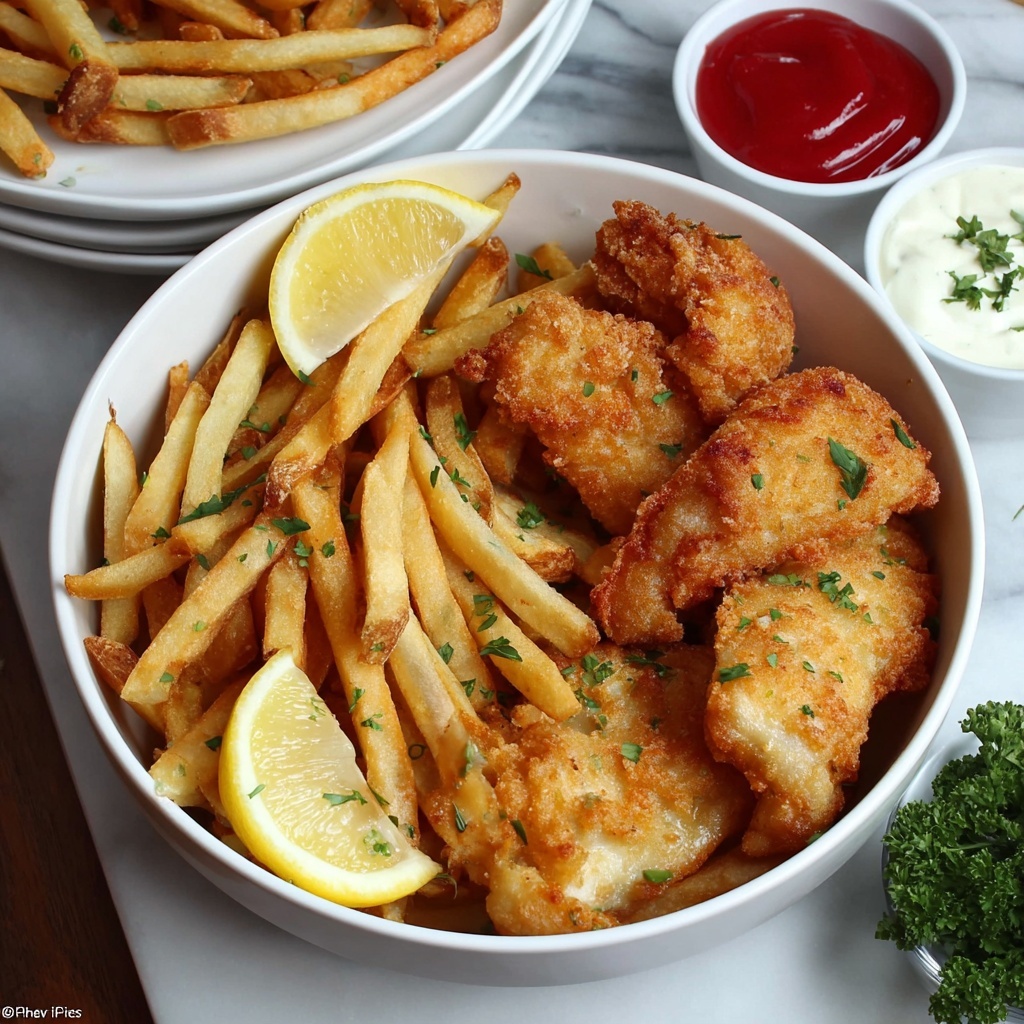
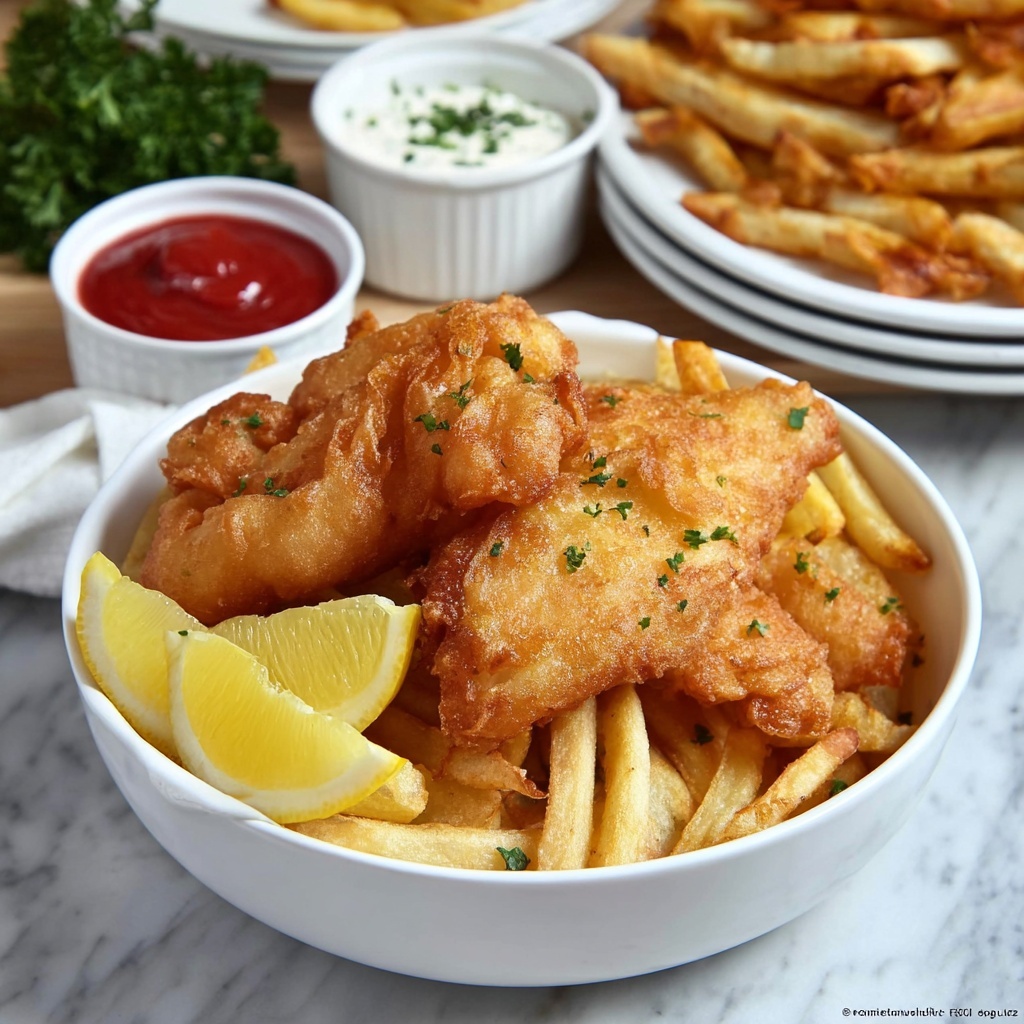
If there’s one dish that brings the perfect combination of crispy, golden goodness with tender, flaky fish, it’s this Classic Fish and Chips Recipe. This iconic British favorite boasts a delightful crunch on the outside, with moist, flavorful fish inside, paired with perfectly crisp fries. Whether you’re enjoying it after a long week or serving it up for friends, this recipe turns simple ingredients into a truly comforting and satisfying meal.
Ingredients You’ll Need
Gathering the right ingredients is surprisingly simple for this Classic Fish and Chips Recipe. Each element plays a crucial role in achieving that distinctive texture and flavor—from the light, bubbly beer batter to the starchy russets that fry into irresistibly crispy chips.
- Fish fillets (6): Choose cod, pollock, tilapia, or your preferred white fish for tender, flaky bites.
- Flour (1 cup): Provides the base for the crispy batter and helps coat the fish evenly.
- Baking powder (1 teaspoon): Adds lightness and helps the batter puff beautifully when fried.
- Salt (1 teaspoon): Essential for bringing out and balancing all the flavors.
- Onion powder (1/4 teaspoon): Gives a subtle, savory depth to the batter.
- Garlic powder (1/4 teaspoon): Enhances the overall aroma and taste.
- Beer or milk (12 ounces): Cold beer makes the batter airy and crisp, while milk is a great alternative for richness.
- Vegetable oil (for frying): Neutral flavor and high smoke point perfect for deep frying.
- Russet potatoes (4 large): Ideal for chips, offering a fluffy inside and crisp outside when fried.
- Salt (to taste): To season the chips once they’re perfectly golden.
How to Make Classic Fish and Chips Recipe
Step 1: Prepare the Potatoes
Start by placing the peeled, sliced potatoes into a bowl of ice water for 20 to 30 minutes. This soaking helps remove excess starch, which is key to achieving fries that are crisp on the outside yet tender inside.
Step 2: Heat the Oil for Frying
While the potatoes soak, heat your vegetable oil in a deep skillet or fryer to 330 degrees Fahrenheit. Keeping the initial frying temperature lower ensures the potatoes cook through without browning prematurely.
Step 3: Dry and Fry the Potatoes – First Round
Drain the potatoes from the ice water and pat them completely dry with a kitchen towel—any moisture left will cause the oil to splatter and prevent crispiness. Fry the potatoes in small batches for about 2 minutes, then drain them on paper towels. This preliminary fry sets up a perfect texture once cooked again.
Step 4: Increase Oil Temperature and Prepare Batter
Raise the oil temperature to 370 degrees Fahrenheit. Meanwhile, whisk together the flour, baking powder, salt, onion powder, and garlic powder in a large bowl. Gradually add in the cold beer, stirring carefully to combine into a smooth, airy batter.
Step 5: Coat the Fish
Lightly dust the fish fillets with some extra flour—this helps the batter stick better. Then dip each fillet into the beer batter, allowing excess coating to drip off so the fish stays light and crispy once fried.
Step 6: Fry the Fish
Carefully place the battered fillets into the hot oil at 370 degrees Fahrenheit. Cook each piece for 2 to 3 minutes until they become beautifully golden. Remove and drain on paper towels to keep them crisp.
Step 7: Final Fry of the Chips
Return the pre-fried potatoes to the hot oil at 370 degrees and fry for an additional 4 minutes until golden and crunchy all over. Drain over paper towels and immediately sprinkle with salt to taste for that perfect seasoning.
How to Serve Classic Fish and Chips Recipe
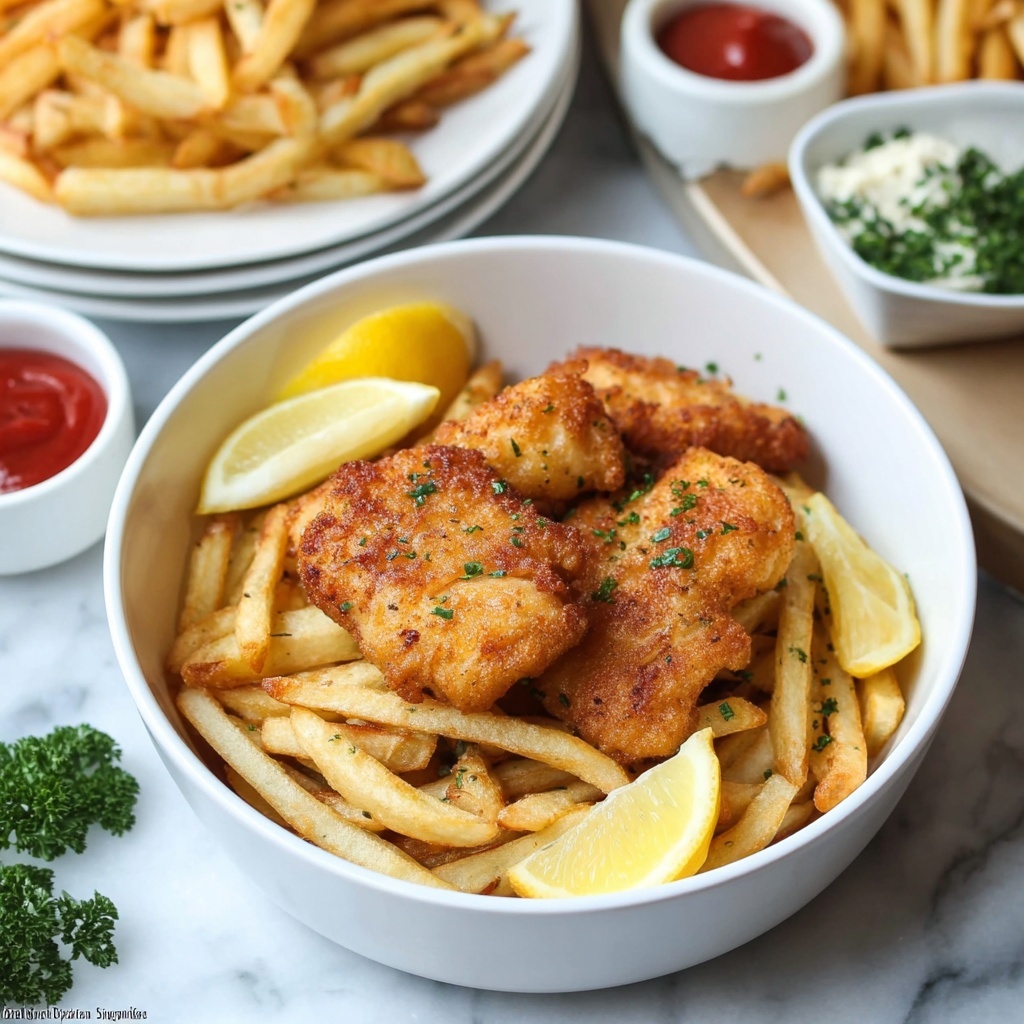
Garnishes
Traditional accompaniments like lemon wedges, a sprinkle of fresh parsley, or a dollop of tartar sauce elevate your Classic Fish and Chips Recipe. These bright touches add acidity and freshness that beautifully cut through the richness of the fried fish and chips.
Side Dishes
Serve your fish and chips alongside mushy peas, coleslaw, or a crisp green salad for a well-rounded meal. These sides provide vibrant color and texture contrasts, ensuring every bite feels balanced and satisfying.
Creative Ways to Present
For a fun twist, pile your fish and chips into rustic paper cones or serve them atop a bed of shredded lettuce with dipping sauces on the side for communal sharing. Adding some malt vinegar or spicy ketchup can also give that authentic British seaside vibe you’re aiming for.
Make Ahead and Storage
Storing Leftovers
Leftover fish and chips can be stored in an airtight container in the refrigerator for up to two days. Keep the fish and chips separated if possible to prevent sogginess, ideally using paper towels to absorb excess moisture.
Freezing
You can freeze cooked fish and chips, but note that texture may slightly change upon reheating. Freeze them in a single layer on a baking sheet before transferring to a freezer-safe bag to maintain their crispness as much as possible.
Reheating
To bring back the crunchy goodness, reheat fish and chips in a hot oven or air fryer instead of the microwave. This method helps restore the outer crisp while warming the fish through without drying it out.
FAQs
Can I use a different type of fish for this Classic Fish and Chips Recipe?
Absolutely! While cod and pollock are traditional, tilapia, haddock, or even halibut can work wonderfully. Just choose a firm white fish that flakes easily.
Is beer necessary for the batter, or can I substitute it?
You can swap out beer for milk or sparkling water if you prefer. Beer adds a unique flavor and helps create a light, bubbly batter but alternatives still produce great results.
Why soak the potatoes in ice water?
Soaking removes excess starch, which prevents the fries from sticking together and helps achieve that sought-after crispy exterior.
Can I bake the chips instead of frying them?
Yes, baking is a healthier option though it won’t deliver quite the same crunch. Parboil the potatoes first, then toss with oil and bake at a high temperature for best results.
How do I know when the oil is at the correct temperature?
A deep-fry thermometer is the easiest way to check. If unavailable, carefully drop a small piece of batter into the oil—if it bubbles and rises immediately, the oil is hot enough.
Final Thoughts
This Classic Fish and Chips Recipe truly captures the soul of comfort food with its perfectly crispy batter and golden chips. It’s a joy to make and share, bringing a little piece of the British seaside right to your kitchen. Give it a go and prepare to impress yourself and your loved ones with this timeless, delicious dish!
Print
Classic Fish and Chips Recipe
- Prep Time: 50 minutes
- Cook Time: 30 minutes
- Total Time: 80 minutes
- Yield: 6 servings
- Category: Main Dish
- Method: Frying
- Cuisine: British
Description
This Classic Fish and Chips recipe delivers crispy, golden fried fish fillets paired with perfectly cooked, crunchy twice-fried Russet potato chips. The beer batter coating the white fish gives a light and airy texture, while the double frying method ensures the chips have a crispy exterior and tender inside. Perfectly seasoned and ideal for a comforting meal, this recipe serves six.
Ingredients
Fish
- 6 fish fillets (cod, pollock, tilapia, or your choice of white fish)
- 1 cup flour
- 1 teaspoon baking powder
- 1 teaspoon salt
- 1/4 teaspoon onion powder
- 1/4 teaspoon garlic powder
- 12 ounces beer or milk (preferably ice cold)
- Additional flour for dusting fish fillets
Potatoes and Frying
- 4 large Russet potatoes (peeled and sliced into large fingers, mandolin slicer recommended)
- Vegetable oil for frying
- Salt to taste
Instructions
- Soak the potatoes: Place the peeled and sliced potatoes in a bowl of ice water for 20-30 minutes to remove excess starch and help achieve crispiness.
- Heat the oil: Heat vegetable oil in a deep heavy skillet or deep fryer to 330°F (165°C) for the first fry of the potatoes.
- Dry potatoes: Drain the soaked potatoes and dry them thoroughly with a kitchen towel to prevent oil splatter and ensure even frying.
- First fry of potatoes: Carefully fry the potatoes, about 1 cup at a time, in the hot oil for approximately 2 minutes until they just begin to cook but are not browned.
- Drain first fry potatoes: Remove the potatoes with a slotted strainer and drain over paper towels to remove excess oil.
- Repeat first fry: Repeat the first frying process with all potato batches to partially cook them before final crisping.
- Increase oil temperature: Raise oil temperature to 370°F (188°C) for frying the fish and crisping the chips.
- Prepare the batter: In a large bowl, stir together flour, baking powder, salt, onion powder, and garlic powder. Gradually whisk in the ice-cold beer or milk until smooth to create a light batter.
- Coat fish fillets: Lightly dust each fish fillet with additional flour, then dip into the batter, allowing excess batter to drip off for an even coating.
- Fry the fish: Carefully add battered fillets to the hot 370°F oil and fry until golden and cooked through, about 2-3 minutes per side depending on thickness.
- Drain fried fish: Use a slotted spoon or tongs to remove the fish from oil and drain on paper towels to remove excess oil.
- Second fry of potatoes: Return the partially cooked potatoes to the hot 370°F oil and fry until golden brown and crispy, about 4 minutes.
- Drain and season chips: Remove the chips from oil, drain over paper towels, and season with salt to taste immediately when hot.
Notes
- Ensure potatoes are dried completely to avoid hot oil splatters.
- Use ice-cold beer or milk for the batter to create a lighter, crispier coating.
- Double frying the potatoes is essential for the perfect crisp texture.
- Maintain oil temperature to prevent greasy fish and soggy chips.
- Cook fish in batches if necessary to avoid overcrowding the fryer.