
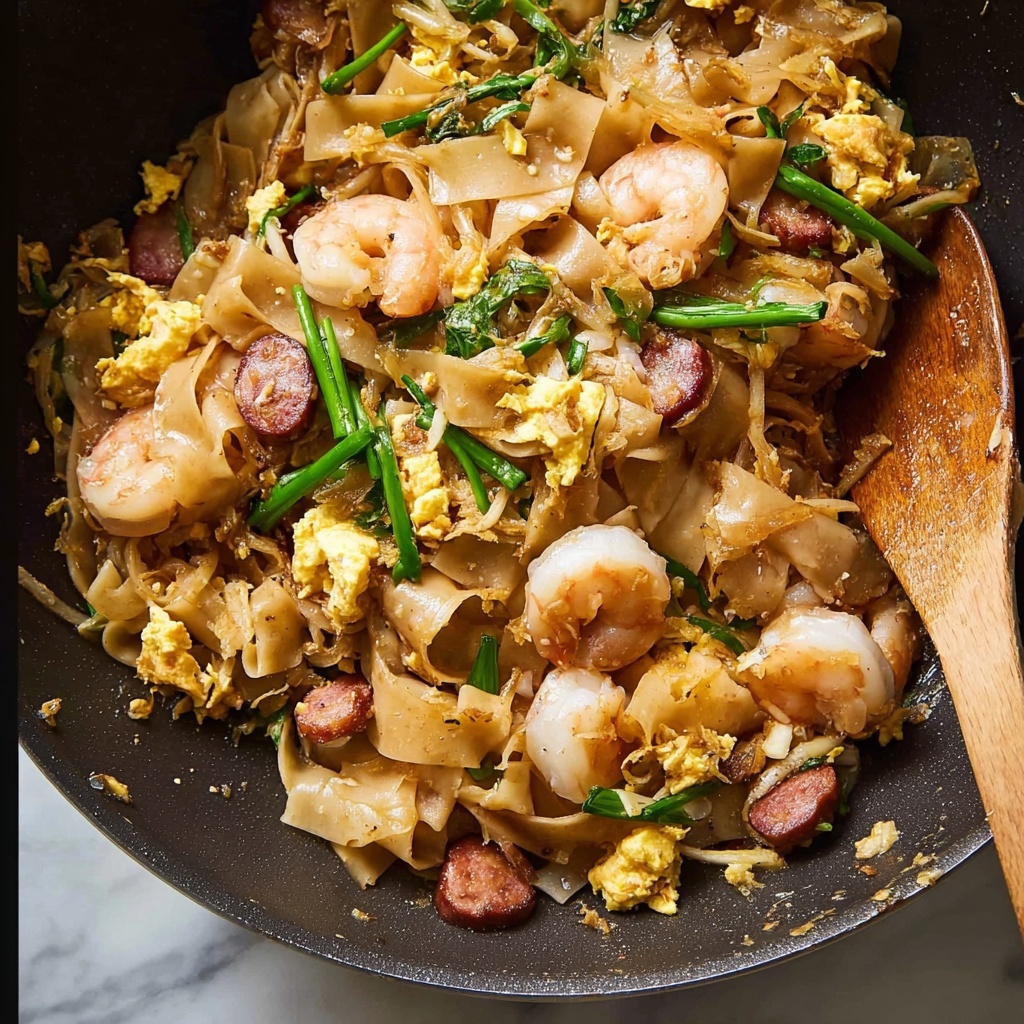
If you’ve ever wandered the vibrant hawker centers of Southeast Asia or dreamed of the sizzling sounds and smoky aromas of street food stalls, this Char Kway Teow Recipe will transport you straight there. This beloved stir-fried noodle dish perfectly balances savory, sweet, and smoky flavors with a delightful mix of textures—from tender rice noodles to crunchy bean sprouts and juicy prawns. Making Char Kway Teow at home might sound intimidating, but with just the right ingredients and a hot wok, you’re about to discover how simple and rewarding it can be to recreate this iconic dish yourself.
Ingredients You’ll Need
The beauty of this Char Kway Teow Recipe is how uncomplicated yet essential each ingredient is. Every component adds a burst of flavor, color, or texture, working together to create that perfect harmony in every bite.
- 500 g fresh wide rice noodles: Fresh noodles are key for that tender chew and perfect sauce absorption.
- 2 tbsp lard (or vegetable oil): Lard adds authentic smokiness, but oil works great for a lighter touch.
- 2 tbsp vegetable oil (separated): Helps control the cooking process and prevents sticking.
- 10 small prawns, shelled and deveined: Adds a juicy sweetness and protein punch.
- 2 garlic cloves, finely chopped: The aromatic base that wakes up the wok.
- 1 Chinese sausage, thinly sliced on the diagonal: Brings a subtle sweetness and meaty texture.
- 5 cm piece of fried fish cake, thinly sliced: Provides a delightful chewiness and umami depth.
- 20 stems garlic chives, cut into 4 pieces: Fresh, slightly garlicky greens that brighten the dish.
- 2 1/2 cups bean sprouts: Adds refreshing crunch and lightness.
- 2 eggs, whisked: Creates richness and helps bind the flavors together.
- 5 tsp dark soy sauce: Delivers deep color and a hint of sweetness.
- 4 tsp light soy sauce: Balances saltiness without overpowering.
- 2 tsp oyster sauce: Contributes savory umami boost.
- 4 tsp kecap manis (sweet soy sauce): Sweet and syrupy, perfect for that signature glaze.
How to Make Char Kway Teow Recipe
Step 1: Prepare the Sauce
Start by mixing together all the soy sauces, oyster sauce, and kecap manis in a small bowl. This combination of sauces is what gives your Char Kway Teow Recipe its signature flavor and irresistible gloss, so make sure they’re well combined before you begin cooking.
Step 2: Get Your Wok Smoking Hot
Heat 1 tablespoon of lard and 1 tablespoon of vegetable oil in a large wok over high heat until it’s nearly smoking. This searing heat is essential for achieving that prized “wok hei,” or breath of the wok, which imparts a smoky, slightly charred flavor that defines good Char Kway Teow.
Step 3: Sauté Aromatics and Meats
Add the finely chopped garlic and stir-fry rapidly for about 20 seconds until fragrant but not burnt. Toss in the Chinese sausage slices, prawns, and fried fish cake, and stir-fry until the prawns turn pink and the sausage releases its aroma—about 2 minutes.
Step 4: Add Noodles and Veggies
Now it’s time to add the fresh wide rice noodles. Toss them gently but thoroughly to coat with the flavorful oils and aromas. Follow with the garlic chives and bean sprouts, continuing to stir-fry quickly to maintain their crunchy freshness.
Step 5: Pour in the Egg and Sauce
Push the noodle mixture to the edges of the wok, creating a well in the center. Pour in the whisked eggs and let them cook briefly before scrambling and mixing them through the noodles. Immediately add the sauce mixture and give everything a vigorous toss to combine and glaze the noodles beautifully.
Step 6: Final Touches and Serve
Drizzle the remaining tablespoon of lard or oil around the edges and give it one last quick toss for extra flavor and gloss. Remove quickly from heat while still hot and perfectly charred.
How to Serve Char Kway Teow Recipe
Garnishes
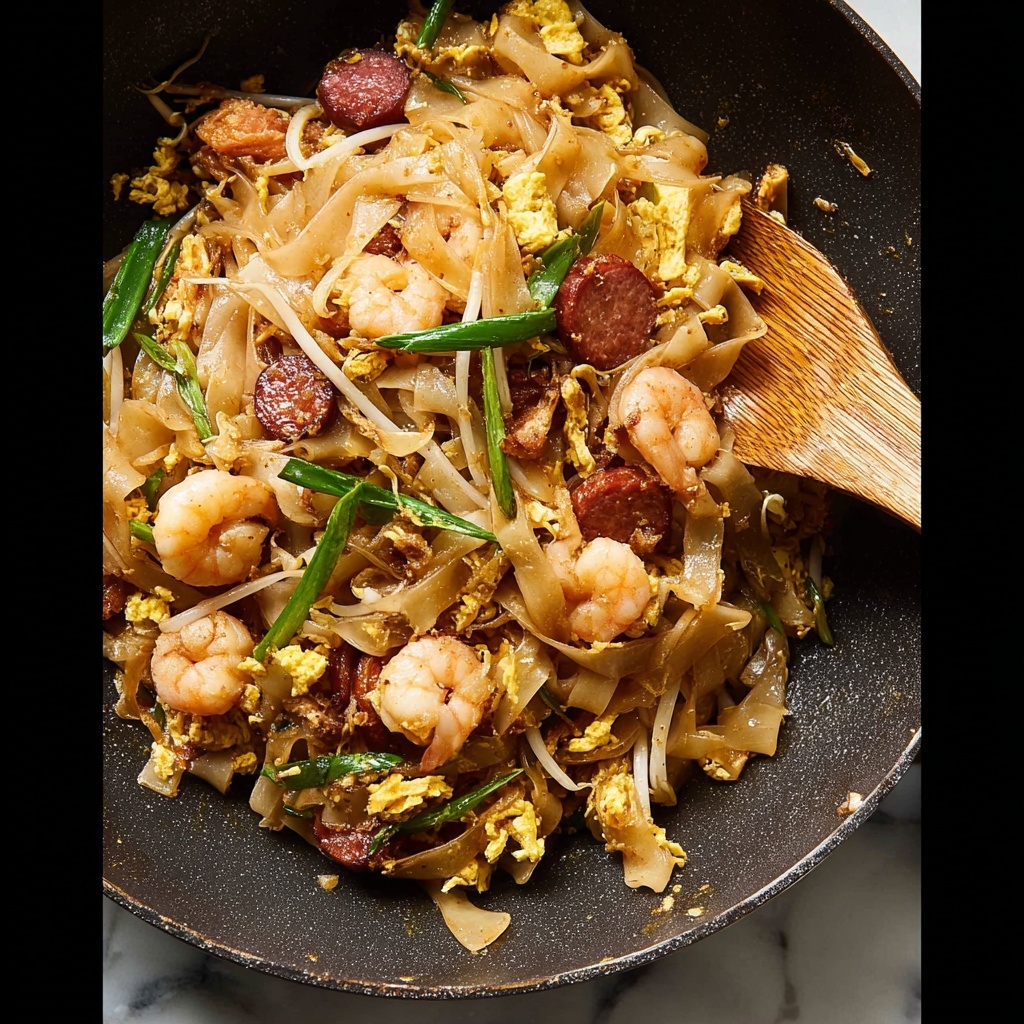
Presentation is just as important as the flavor. Fresh lime wedges alongside sprinkle of crispy fried shallots or freshly chopped scallions add brightness and an extra layer of texture. A dash of chili flakes or fresh sliced red chilies can also bring vibrant heat if you love a kick.
Side Dishes
Char Kway Teow is quite filling on its own, but pairing it with a light cucumber salad or a simple broth-based soup can help balance the richness. Pickled vegetables also offer a refreshing contrast to the smoky noodles.
Creative Ways to Present
For a fun twist, serve your Char Kway Teow Recipe in small individual bowls for a family-style feast, or lay the noodles over a bed of fresh greens for a lighter, colorful presentation. Adding a fried egg on top is another popular variation that adds indulgent silkiness.
Make Ahead and Storage
Storing Leftovers
Keep any leftovers in an airtight container in the refrigerator for up to two days. The noodles will absorb the sauce further and flavors intensify, though the fresh veggies may lose some crunch.
Freezing
Freezing Char Kway Teow is possible but not ideal, as the texture of the noodles and veggies can degrade. If you need to freeze, separate into portions and store tightly sealed, then thaw overnight in the fridge before reheating.
Reheating
Reheat in a hot pan or wok rather than a microwave to revive the smoky wok hei flavor and maintain a nice texture. Add a splash of oil or water if the noodles seem dry and toss frequently to heat evenly.
FAQs
What makes Char Kway Teow so special?
What sets Char Kway Teow apart is the combination of fresh ingredients, the high heat cooking for that beloved smoky aroma, and the well-balanced savory-sweet sauce that perfectly clings to every strand of noodle.
Can I use dried noodles instead of fresh?
You can, but fresh wide rice noodles are highly recommended for the best texture and absorption. Dried noodles may require soaking and could become mushy or less fragrant when cooked.
Is lard necessary for authentic flavor?
Lard gives an authentic smoky richness typical of traditional Char Kway Teow, but you can replace it with vegetable oil if preferred. Just remember that the flavor profile will be slightly lighter.
How spicy is Char Kway Teow?
Char Kway Teow itself is not inherently spicy, but it can be served with chili paste or fresh chilies on the side for those who enjoy heat. You can adjust the spice level to your taste during serving.
Can this recipe be made vegetarian?
Yes! Simply omit the prawns, Chinese sausage, and fish cake, then boost the flavor with tofu, mushrooms, or additional vegetables. Use vegetarian oyster sauce alternatives to keep the umami intact.
Final Thoughts
There’s something incredibly satisfying about mastering a dish like this Char Kway Teow Recipe at home—it’s comfort food with an exciting edge that showcases the magic of wok cooking. With a handful of humble ingredients and quick hands, you’ll experience the joy of a restaurant-quality meal that’s as fun to cook as it is to eat. So, gather your ingredients, fire up that wok, and treat yourself and your loved ones to this unforgettable noodle feast!
Print
Char Kway Teow Recipe
- Prep Time: 15 minutes
- Cook Time: 5 minutes
- Total Time: 20 minutes
- Yield: 2 to 3 servings
- Category: Main Course
- Method: Stovetop
- Cuisine: Malaysian
Description
Char Kway Teow is a popular Malaysian stir-fried noodle dish featuring wide rice noodles, succulent prawns, Chinese sausage, fish cake, crunchy bean sprouts, and garlic chives, all tossed in a savory, slightly sweet soy-based sauce. This quick and flavorful dish is prepared by stir-frying over high heat to achieve the perfect smoky aroma known as ‘wok hei.’ Ideal for a quick dinner, it balances textures and tastes for a satisfying meal that serves 2-3 people.
Ingredients
Main Ingredients
- 500 g / 1 lb fresh wide rice noodles
- 10 small prawns/shrimp, shelled and deveined
- 1 Chinese sausage / Lup Chong Sausage, sliced thinly on the diagonal
- 5 cm / 2″ piece of fried fish cake, sliced thinly
- 20 stems garlic chives, cut into 4 pieces
- 2 1/2 cups bean sprouts
- 2 eggs, whisked
Oils
- 2 tbsp lard (or vegetable oil as alternative)
- 2 tbsp vegetable oil (divided)
Sauces
- 5 tsp dark soy sauce
- 4 tsp light soy sauce
- 2 tsp oyster sauce
- 4 tsp kecap manis / sweet soy sauce
Others
- 2 garlic cloves, finely chopped
Instructions
- Prepare the Sauce: In a small bowl, mix together the dark soy sauce, light soy sauce, oyster sauce, and kecap manis to create the flavorful stir-fry sauce that will season the noodles perfectly.
- Cook Prawns and Aromatics: Heat 1 tablespoon of vegetable oil and 2 tablespoons of lard in a large wok or skillet over high heat until hot. Add the finely chopped garlic and stir-fry briefly until fragrant. Next, add the prawns and cook until they turn pink and are just cooked through, approximately 2 minutes.
- Add Sausage and Fish Cake: Add the sliced Chinese sausage and fish cake to the wok. Stir-fry together with the prawns and garlic for another 1-2 minutes, allowing the sausage to release its aromatic oils and the fish cake to warm through.
- Stir-fry Noodles and Vegetables: Add the fresh wide rice noodles to the wok, breaking up any clumps. Pour over the prepared sauce mixture and toss well to coat the noodles evenly. Push the noodles to one side of the wok, pour in the whisked eggs, and quickly scramble them until just set. Stir the eggs through the noodles. Then add the garlic chives and bean sprouts, tossing everything together over high heat for another 1-2 minutes until all ingredients are cooked but still retain their crunch.
Notes
- Use fresh rice noodles for best texture; if using dried, soak and drain thoroughly before cooking.
- Lard imparts authentic flavor but vegetable oil can be used as a substitute for a lighter dish.
- Chinese sausage (Lup Chong) adds a sweet, savory dimension; available in Asian grocery stores.
- Fried fish cake is optional but adds texture; other fish balls or similar can be substituted.
- Garlic chives provide a unique aroma and subtle onion flavor, essential to traditional Char Kway Teow.
- Kecap manis is a sweet Indonesian soy sauce and is key to the characteristic sweet-savory balance in the dish.
- Cook over high heat quickly to achieve ‘wok hei’ or ‘breath of the wok’ for authentic taste.