Description
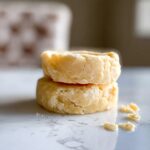
This homemade flaky pie crust recipe produces tender, buttery, and perfectly textured crusts ideal for both sweet and savory pies. Made with a combination of butter and shortening, it yields two versatile pie crusts ready to be rolled out, filled, and baked to golden perfection. The detailed steps ensure a foolproof dough that is flaky and easy to handle, whether baking fruit pies, quiches, or any classic pie.
Ingredients
Scale
Dry Ingredients
- 2 & 1/2 cups all-purpose flour (spooned and leveled)
- 2 tablespoons granulated sugar (use 1 tablespoon for savory pies)
- 1 teaspoon kosher salt
Fat
- 8 tablespoons butter-flavored shortening (1/2 cup)
- 12 tablespoons cold butter (1 and 1/2 sticks)
Liquid Ingredients
- 2 tablespoons beaten egg (half a large egg)
- 1/4 cup ice water (plus more if necessary)
Instructions
- Prepare the ice water: Fill a small bowl with ice water and keep it very cold for use in the dough to ensure flakiness.
- Mix dry ingredients: In a large bowl, whisk together the flour, sugar (adjusting for sweet or savory pies), and kosher salt.
- Add shortening: Incorporate the butter-flavored shortening into the flour mixture; alternatives such as lard or butter can be used.
- Add cold butter chunks: Chop the cold butter into small pieces and add to the bowl.
- Cut in fats: Using a pastry cutter, cut the butter and shortening into the flour mixture until you have pea-sized pieces of fat throughout—larger chunks are acceptable for flakiness.
- Prepare egg wash: Whisk a whole egg lightly, then separate half into another bowl, saving it for brushing the finished pie.
- Mix egg with ice water: Combine 1/4 cup ice water with 2 tablespoons beaten egg, then mix thoroughly.
- Add liquid to dry mix: Pour the egg-water mixture into the flour and fat mixture, stirring with a rubber spatula to hydrate as much flour as possible.
- Knead dough carefully: Flour your hands and gently knead the dough in the bowl, pressing pieces together. Add extra ice water cautiously, 1-3 teaspoons at a time, just enough to bring the dough together without overworking it to prevent toughness.
- Divide and chill: Shape the dough into two equal discs, wrap with plastic, and chill for at least 30 minutes to firm up the fats and relax gluten.
- Roll out first disc: Dust work surface with flour, remove one disc from fridge and let it sit for 5 minutes. Roll gently from center outward, turning dough a quarter turn frequently, repairing cracks by pressing and moistening edges as needed.
- Prevent sticking: Continuously dust dough and surface with flour, lift and turn dough multiple times to avoid sticking.
- Roll to size: Continue rolling until dough is about 13 inches in diameter, ensuring it’s not sticking.
- Transfer to pie plate: Use rolling pin to lift dough and place over a 9-inch pie plate, fitting it into the corners carefully, repairing any tears, leaving an overhang around the edge.
- Prepare second disc: Chill pie plate with first crust, then roll out the second disc to about 11-12 inches while the first is chilling.
- Fill pie: Add filling as desired, dotting with butter if called for in your pie recipe.
- Lattice or top crust: Optionally create a lattice or lay rolled second crust over the pie filling.
- Seal edges: Press the two crusts together at edges, folding under to align with pie plate rim, then flute edges decoratively with fingers or knuckles.
- Chill before baking: Refrigerate the assembled pie for at least 30 minutes if dough feels soft to firm it up.
- Apply glaze: Just before baking, brush crust with a mix of 1 tablespoon beaten egg and 1 tablespoon milk, and sprinkle with sugar on sweet pies.
- Bake: Follow your pie recipe to bake. A recommended method is baking at 425°F for 15-20 minutes, then reducing to 350°F for 25-50 minutes, using a preheated baking sheet for a flaky bottom crust.
- Protect crust edge: Use a foil pie shield during the latter half of baking to prevent burning.
- Cool pie: Let sweet pies cool to room temperature for 2-4 hours to let juices set before slicing.
Notes
- Spoon and level flour rather than scooping to avoid dense dough.
- Use 1 tablespoon sugar instead of 2 for savory pies.
- Butter-flavored shortening can be substituted with lard or all butter, but a combination of butter and shortening gives optimum flakiness.
- Keep all fats cold for a tender, flaky crust.
- Be cautious adding water; too much makes dough tough.
- Rolling dough on parchment paper helps transfer the crust without tearing.
- Using a preheated baking sheet improves bottom crust flakiness.
- Letting the pie cool completely before slicing helps filling set properly.