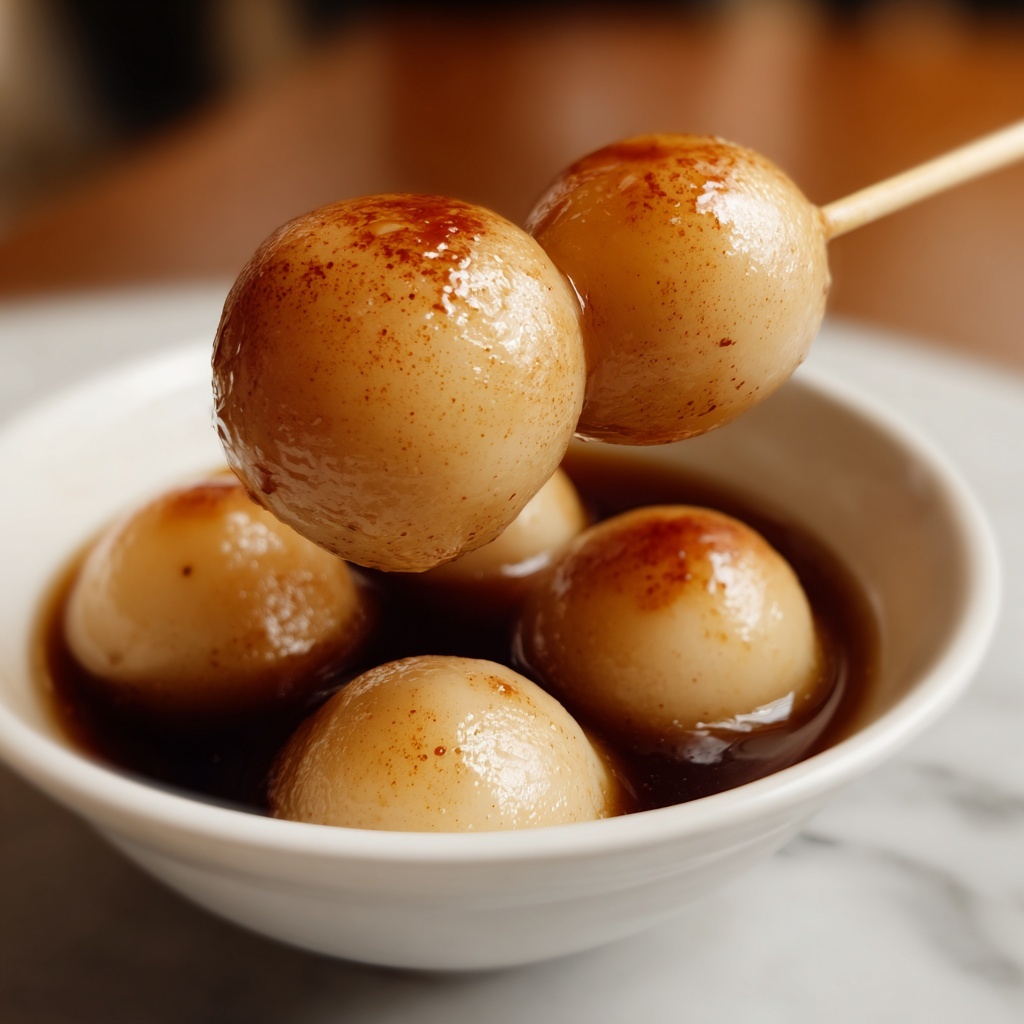
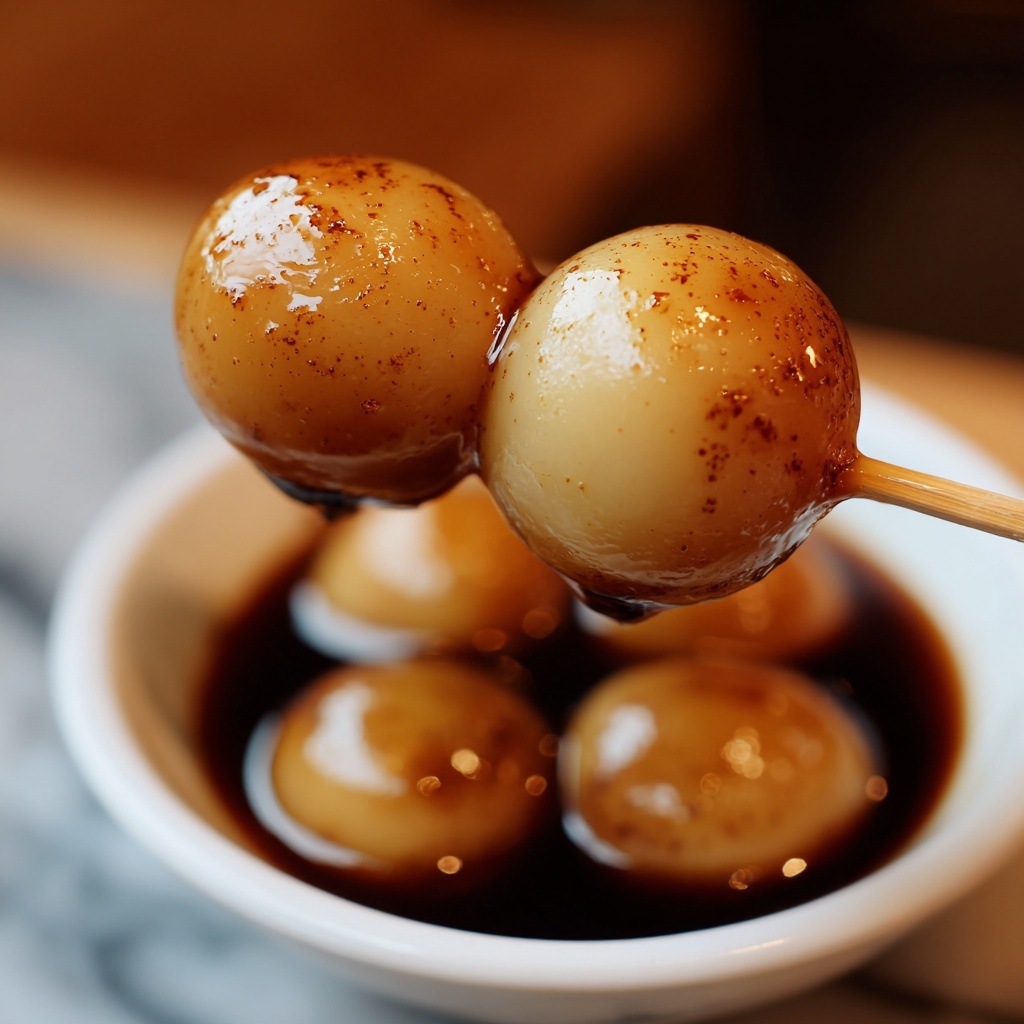
If you’ve ever wandered through a Japanese festival or cozy street market, chances are you’ve been tempted by the irresistible, glossy skewers of Mitarashi Dango. This Mitarashi Dango Recipe captures that nostalgic magic by blending chewy, tender rice dumplings with a perfectly balanced sweet soy glaze that’s smoky, caramelized, and just downright comforting. Each bite delivers a delightful play of textures and flavors that invite you to slow down and savor something special. Whether you’re new to Japanese sweets or a longtime fan, making Mitarashi Dango at home is a joyful experience that brings a bit of tradition and warmth straight into your kitchen.
Ingredients You’ll Need
These ingredients are simple yet fundamental to nailing the authentic texture and flavor of your Mitarashi Dango. Each item plays a specific role, from creating that tender, chewy dough to the glossy, perfectly sweet soy sauce that elevates every bite.
- 1 cup shiratamako sweet rice flour: This special flour gives dango their signature chewy and smooth texture, key to achieving that soft, pillowy bite.
- 1/2 cup warm water (plus more as needed): Needed to hydrate the rice flour and form the dough; warm water helps bring the dough together more easily.
- 1 cup water for sauce: Forms the base of the sweet soy glaze, balancing the salty and sweet flavors.
- 1/4 cup soy sauce: Provides that classic umami depth and saltiness in the sauce.
- 1/4 cup granulated sugar: Sweetens the sauce and gives it that irresistible caramelized note.
- 1 tablespoon cornstarch: Thickens the sauce to a glossy, clingy consistency.
- Bamboo skewers: Essential for threading the dango balls, making them easy to grill and enjoy.
How to Make Mitarashi Dango Recipe
Step 1: Prepare the Dough
Start by adding your shiratamako sweet rice flour to a bowl. Gradually pour in the warm water, mixing gently but steadily until you form a smooth, soft dough resembling play dough. It should be pliable and not sticky. If it feels too dry, add water a teaspoon at a time until just right. This step is where the magic begins, setting the stage for those perfectly chewy dumplings.
Step 2: Shape the Dango Balls
Divide your dough into small, uniform balls about the size of a tablespoon each. Keeping them similar in size ensures even cooking and an attractive final presentation on the skewers. Don’t worry if they aren’t perfectly round; their rustic charm adds to the homemade feel.
Step 3: Boil the Dumplings
Bring a pot of water to a gentle boil. Carefully drop the dough balls into the water and watch them float to the surface—that’s your sign that they’re nearly cooked. Keep boiling for another 1 to 2 minutes to ensure the center is chewy and cooked through. Then, quickly transfer them to a bowl of cold water to stop cooking and cool them down, followed by thorough draining.
Step 4: Skewer and Grill
Thread 3 to 4 dango balls onto each bamboo skewer, creating perfect little skewers of delight. Heat a nonstick skillet or grill pan over medium heat, and toast the skewers lightly, turning occasionally until each dumpling has a slightly charred, golden-brown surface. This caramelized exterior contrasts wonderfully with the soft inside.
Step 5: Make the Sweet Soy Sauce Glaze
In a small saucepan, combine the water, soy sauce, sugar, and cornstarch. Cook over medium heat, stirring constantly, until the sauce thickens into a glossy, luscious glaze. This sauce is the heart of the Mitarashi Dango Recipe, giving it that trademark shiny, sweet-savory coating that will have you reaching for more.
Step 6: Serve Hot
Generously spoon the warm sauce over your freshly grilled dango skewers and serve immediately. The warmth of the skewers paired with the sticky, shiny glaze is the ultimate comfort, perfect for sharing or savoring on your own.
How to Serve Mitarashi Dango Recipe
Garnishes
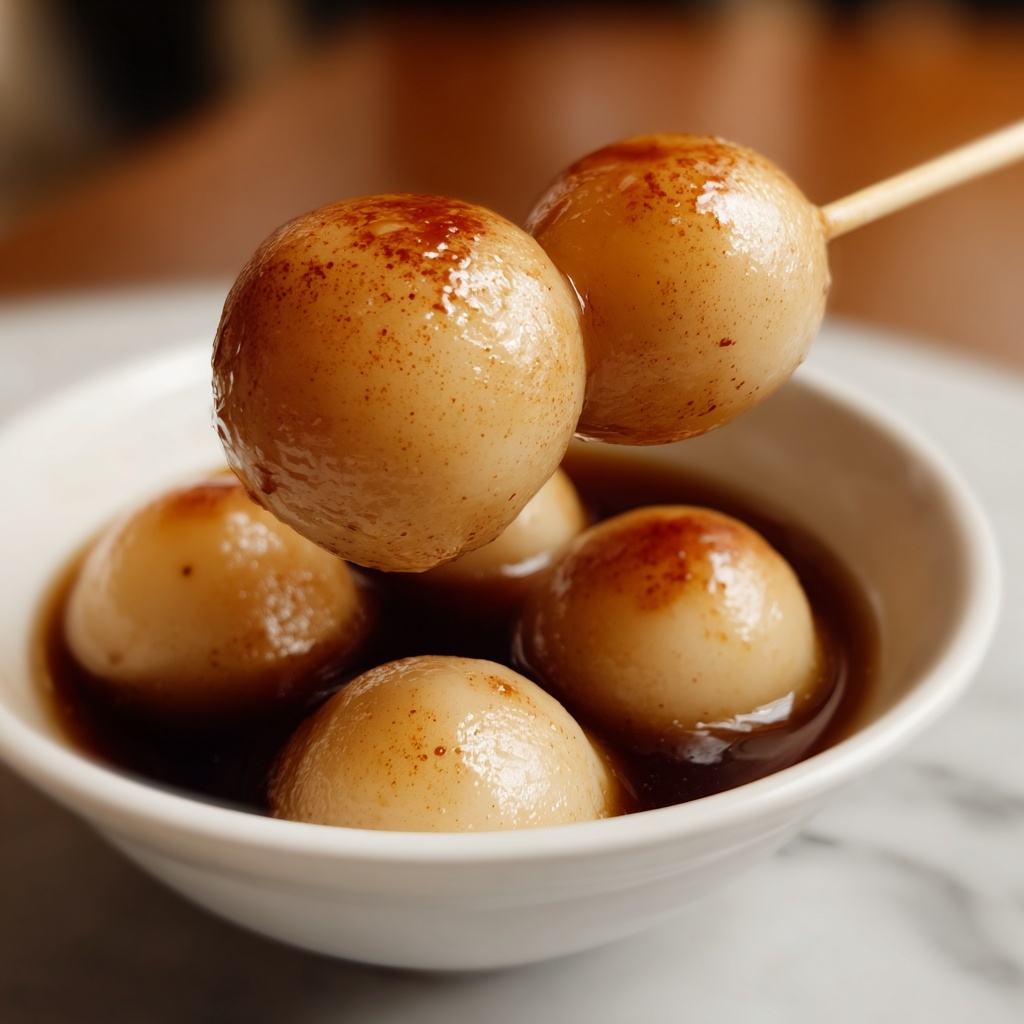
Though the Mitarashi Dango Recipe shines brilliantly on its own, subtle garnishes like a sprinkle of toasted sesame seeds or a small dusting of kinako (roasted soybean flour) add an earthy depth and delightful contrast. These simple additions can personalize each skewer and enhance the visual appeal, making your presentation all the more inviting.
Side Dishes
Pair your Mitarashi dango with light green tea or matcha, whose subtle bitterness balances the sweet soy glaze perfectly. For a more substantial meal, serving alongside a bowl of miso soup or a delicate seaweed salad creates a harmonious Japanese-inspired spread that feels both authentic and comforting.
Creative Ways to Present
Take your presentation up a notch by arranging the skewers on a rustic wooden board or a traditional Japanese plate. You might also drizzle a little extra sauce artistically onto the plate for a gourmet touch. For a playful twist, try serving the dango with small dipping bowls of extra glaze or a side of sweet red bean paste for dipping—either way, it adds an element of fun and variety to your serving style.
Make Ahead and Storage
Storing Leftovers
Mitarashi dango is best enjoyed fresh and warm for the ideal texture. However, if you need to store leftovers, keep the skewers in an airtight container in the refrigerator for up to one day. Be aware that the dango may firm up and lose some of their original chewiness as they cool.
Freezing
Freezing is not recommended for Mitarashi dango since the texture suffers greatly upon thawing. The chewy, soft nature of the rice flour dough doesn’t retain well after freezing, often becoming brittle or tough instead of delightfully tender.
Reheating
When reheating chilled dango, gently warm them in a nonstick skillet over low heat or briefly microwave covered with a damp paper towel to restore softness. After warming, reapply or reheat the sauce and coat the skewers for that fresh-from-the-kitchen flavor and texture experience.
FAQs
What is shiratamako and can I substitute it?
Shiratamako is a finely milled glutinous rice flour prized for its ability to create ultra-soft, chewy mochi textures. Mochiko is a common substitute but results in a slightly different, less chewy texture. Adjust water ratios as needed if using a different flour to get the right dough consistency.
Can I make Mitarashi Dango without skewers?
While skewers are traditional and convenient for grilling and eating, you can serve the dango as individual balls on a plate. Just drizzle the sauce over them generously and serve with a fork or toothpicks instead.
How sweet is the sauce and can I adjust it?
The sweet soy sauce glaze strikes a lovely balance between salty, sweet, and umami, but you can easily adjust the sweetness by adding more sugar or reducing it based on your personal taste preference.
Is Mitarashi Dango gluten-free?
Yes! Since shiratamako is made from glutinous rice flour, it’s naturally gluten-free. Just make sure to use gluten-free soy sauce to keep the entire dish safe if you have gluten sensitivity.
Can I prepare Mitarashi Dango Recipe for a crowd?
Absolutely! The recipe scales well, just multiply the ingredients accordingly. They make wonderful party treats because they are bite-sized, easy to eat, and universally loved. Just prepare multiple batches for continuous fresh servings.
Final Thoughts
Once you try this Mitarashi Dango Recipe, it’s hard not to fall in love with the delicate chew of the dango combined with that irresistibly shiny, sweet soy glaze. It’s the kind of dish that invites you to slow down and enjoy a moment of simple pleasure, and best of all, it’s easy enough to make anytime you want a little taste of Japanese tradition at home. So grab your shiratamako, fire up that pan, and start your own Mitarashi Dango adventure—you won’t regret it!
Print
Mitarashi Dango Recipe
- Prep Time: 20 minutes
- Cook Time: 15 minutes
- Total Time: 35 minutes
- Yield: 4 servings
- Category: Dessert
- Method: Boiling and Grilling
- Cuisine: Japanese
- Diet: Vegetarian
Description
Mitarashi Dango is a traditional Japanese dessert featuring chewy sweet rice flour dumplings skewered and grilled to a slight char, then generously coated with a glossy, sweet soy sauce glaze. This simple yet flavorful treat highlights the classic balance of sweet and savory, perfect for an authentic taste of Japan in your own kitchen.
Ingredients
Dango
- 1 cup shiratamako sweet rice flour
- 1/2 cup warm water (plus more as needed)
Sauce
- 1 cup water
- 1/4 cup soy sauce
- 1/4 cup granulated sugar
- 1 tablespoon cornstarch
Other
- bamboo skewers
Instructions
- Prepare the dough: Add the shiratamako sweet rice flour to a bowl and gradually pour in the warm water, mixing until a smooth, soft dough forms that resembles play dough in texture.
- Form balls: Divide the dough into small portions, about 1 tablespoon each, and roll them into smooth balls.
- Cook the dango: Bring a pot of water to a gentle boil. Drop the dough balls into the boiling water and cook until they float to the surface. Continue boiling them for an additional 1 to 2 minutes to ensure they’re cooked through.
- Cool the dango: Remove the cooked dango with a slotted spoon and immediately transfer them to a bowl of cold water to cool, then drain well to remove excess moisture.
- Skewer the dango: Thread three to four dango balls onto each bamboo skewer, spacing them evenly.
- Toast the skewered dango: Heat a nonstick skillet or grill pan over medium heat. Lightly toast the dango on all sides until they develop a light char, which adds flavor and a slight crispness.
- Make the sauce: In a small saucepan, combine water, soy sauce, sugar, and cornstarch. Cook over medium heat, stirring constantly, until the sauce thickens and becomes glossy.
- Glaze and serve: Spoon the warm, thickened sauce over the grilled dango skewers generously and serve immediately for the best taste and texture.
Notes
- If shiratamako is unavailable, you can substitute with mochiko (glutinous rice flour) and water, though the texture will be slightly different.
- Dango are best enjoyed fresh and warm for the optimal chewy and flavorful experience.
- Adjust the sweetness of the sauce by adding more sugar according to your taste preference.