Description
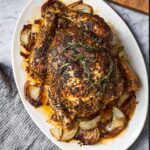
This Roast Chicken with Herbs de Provence recipe offers a succulent, flavorful whole chicken infused with aromatic herbs, garlic, lemon, and a hint of lavender and Aleppo pepper. Perfectly roasted to a golden brown, this dish is an elegant yet simple meal ideal for family dinners or special occasions.
Ingredients
Scale
Vegetables and Herbs
- 2 onions, peeled and thick-sliced from top to bottom
- 6 fresh thyme sprigs (divided)
- 4 fresh rosemary sprigs (divided)
- 3 cloves garlic
- ½ lemon
Meat
- 1 whole organic chicken, 3-4 pounds
Seasonings and Oils
- 2 tablespoons olive oil (divided)
- 1 tablespoon kosher salt
- Freshly ground black pepper, to taste
- 1 tablespoon dried Herbes de Provence
- 2 teaspoons dried edible lavender
- 2 teaspoons Aleppo pepper or red pepper flakes
Liquids
- 1 cup inexpensive white wine (or chicken broth or water as alternatives)
Instructions
- Prepare baking sheet: Cover a large sheet pan with aluminum foil and spray the foil with nonstick spray for easy cleanup.
- Arrange aromatics: Lay the sliced onions, 3 thyme sprigs, and 2 rosemary sprigs on the baking sheet and drizzle with 1 tablespoon of olive oil to infuse flavor into the roasting base.
- Set up rack: Place a metal rack over or inside the baking sheet if it fits, and spray the rack with nonstick cooking spray to prevent the chicken from sticking.
- Dry and position chicken: Pat the chicken dry thoroughly with paper towels to remove moisture; this helps achieve crispy skin. Place the chicken on the sprayed rack.
- Oil and season chicken: Rub the remaining 1 tablespoon of olive oil all over the chicken, both inside and out. Liberally season with kosher salt and freshly ground black pepper to taste.
- Season breast-side: Sprinkle the breast-side of the chicken with 1½ teaspoons Herbes de Provence, 1 teaspoon dried lavender, and 1 teaspoon Aleppo pepper for a fragrant crust.
- Season back-side: Flip the chicken breast-side down and season the backbone side with the remaining Herbes de Provence, lavender, and Aleppo pepper.
- Stuff the cavity: Place the half lemon, garlic cloves, remaining 3 thyme sprigs, and 2 rosemary sprigs into the chicken cavity to infuse flavor from the inside during roasting.
- Optional refrigeration: At this stage, the chicken can be cooked immediately after the oven preheats or refrigerated uncovered up to one day ahead for enhanced flavor.
- Preheat oven and add liquid: Adjust oven rack to the middle position and preheat oven to 450°F (232°C). Set the chicken on the baking sheet and pour the white wine (or broth or water) into the rimmed pan to keep the environment moist and add flavor.
- Initial roasting: Roast the chicken in the oven for 20 minutes at 450°F to brown the skin quickly and seal in juices.
- Reduce temperature and continue roasting: Lower oven temperature to 325°F (163°C), rotate the chicken, and continue roasting for 40 more minutes. If the chicken browns too quickly, tent loosely with foil.
- Check doneness: After this time, check the internal temperature with a meat thermometer. The chicken should be dark golden brown.
- Verify internal temperature: Confirm doneness by ensuring the breast reads 165°F (74°C) and the thigh 178°F-180°F (81°C-82°C). If not done, continue cooking, checking every 5 minutes.
- Rest the chicken: Transfer the chicken to a cooling rack, cover loosely with foil, and let it rest for 15 minutes to allow juices to redistribute.
- Carve and serve: Carve the chicken into pieces once cool enough and arrange on a serving platter.
- Finalize dish: Drizzle with pan juices from the baking sheet and serve with toasty bread and a green salad for a complete meal.
- Enjoy: Savor the deliciously roasted, herb-infused chicken with your favorite sides.
Notes
- Refrigerating the seasoned chicken uncovered before roasting enhances the flavor and helps dry out the skin for extra crispiness.
- If Aleppo pepper is unavailable, substitute with mild red pepper flakes for similar heat and flavor.
- Using a meat thermometer is crucial for ensuring the chicken is cooked safely without overcooking.
- White wine can be substituted with chicken broth or water if preferred or to reduce alcohol content.
- Letting the chicken rest after cooking ensures juicier meat when carved.