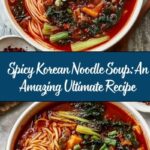
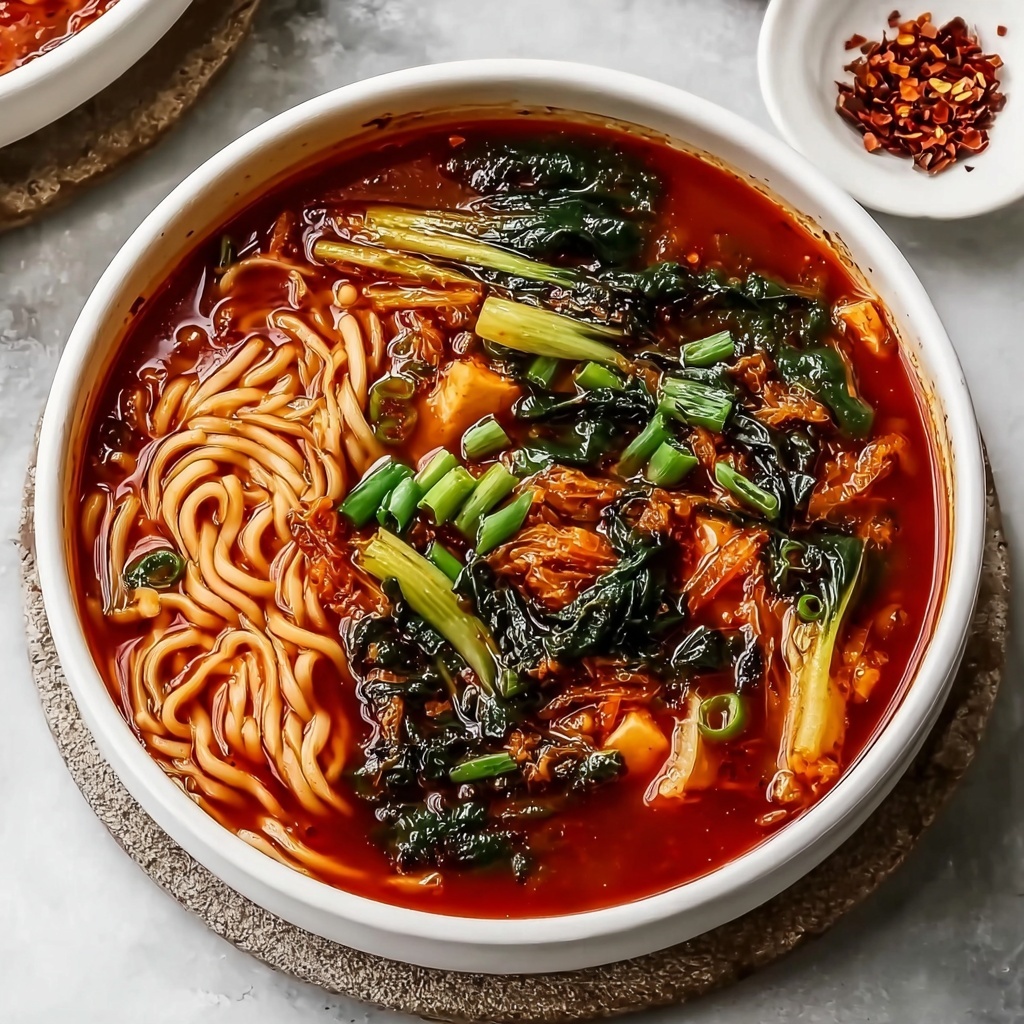
If you’re craving a bowl that perfectly balances bold spice, rich umami, and comforting warmth, look no further than Spicy Korean Noodle Soup: An Amazing Ultimate Recipe. This dish marries chewy Korean wheat noodles with tender pork or beef, crisp napa cabbage, and a vibrant, fiery broth made from gochujang and gochugaru. It’s a soul-warming, flavor-packed soup that you’ll want to make again and again whether it’s a chilly evening or whenever you need a delicious pick-me-up.
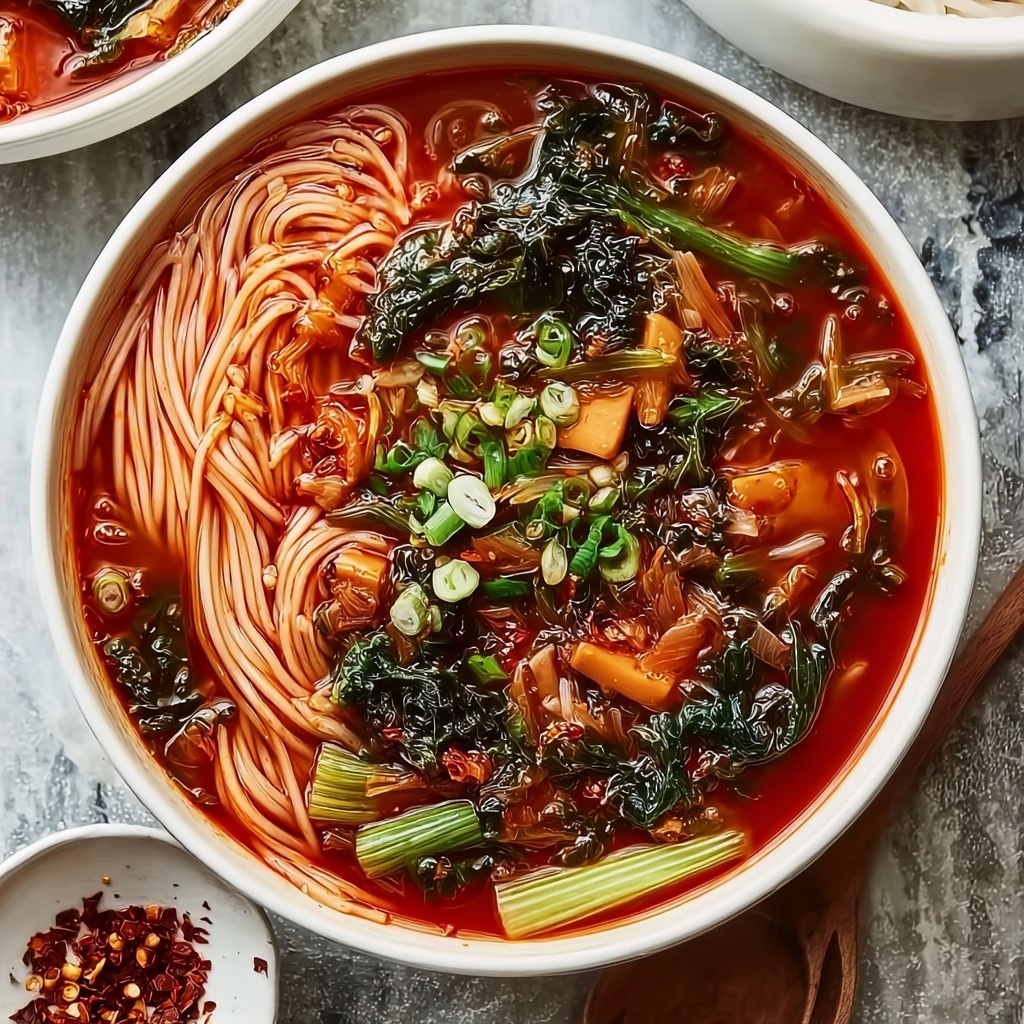
Ingredients You’ll Need
Gathering the right ingredients is the first step to nailing this recipe. Don’t worry — they’re simple staples that work harmoniously to deliver that signature texture, color, and mouthwatering taste you expect from a Korean noodle soup.
- 8 ounces Korean wheat noodles or udon noodles: Provides the chewy, satisfying base that holds the soup together.
- 1 tablespoon sesame oil: Adds a fragrant, nutty aroma that enriches the overall flavor.
- 1 tablespoon vegetable oil: Used for sautéing the meat and vegetables smoothly without overpowering flavors.
- 6 ounces pork belly or thinly sliced beef: Brings savory richness and a melt-in-your-mouth texture when cooked properly.
- 1/2 medium onion sliced: Adds natural sweetness and depth to the broth.
- 1 cup napa cabbage chopped: Offers a fresh crunch and absorbs flavors beautifully.
- 1/2 cup zucchini sliced: Lightens the soup and lends subtle earthiness.
- 1/2 cup mushrooms sliced: Boosts the umami notes essential in Korean cooking.
- 3 cloves garlic minced: Delivers a punch of warmth and savory aroma.
- 1 tablespoon fresh ginger minced: Provides a zesty, cleansing contrast to the spicy broth.
- 2 tablespoons gochujang Korean chili paste: The heart of the soup’s heat and flavor complexity.
- 1 teaspoon gochugaru Korean chili flakes: Adds smoky spice and vibrant red color.
- 6 cups anchovy or chicken broth: Forms the rich, flavorful base that ties everything together.
- 1 tablespoon soy sauce: Enhances the savory dimension and balances the spice.
- 1 teaspoon sugar: Smooths the sharp edges and harmonizes flavors.
- 1/2 teaspoon black pepper: Adds subtle heat and depth.
- 1 soft-boiled egg per serving (optional): Brings creaminess and luxurious richness as a topping.
- 2 green onions sliced: Provides a burst of freshness and crunch.
- 1 teaspoon sesame seeds: Adds texture and a toasty finish.
How to Make Spicy Korean Noodle Soup: An Amazing Ultimate Recipe
Step 1: Cook the noodles
Start by cooking the Korean wheat noodles or udon noodles according to their package instructions. This ensures they have the perfect chewy texture without becoming mushy later in the soup. Once cooked, drain and set aside—they’ll be added back in toward the end for perfectly infused flavor.
Step 2: Brown the meat
In a large pot, combine the sesame oil and vegetable oil over medium heat. Add the pork belly or thinly sliced beef, stirring frequently until it’s lightly browned. This step locks in flavor and creates a delicious base for the soup.
Step 3: Sauté the vegetables
Toss in the sliced onion, napa cabbage, zucchini, and mushrooms. Sauté these for about 3 to 4 minutes until they soften slightly but still retain some bite. This layering of textures is crucial to the final soup experience.
Step 4: Build the broth flavor
Add minced garlic and fresh ginger to the pot, cooking for just 30 seconds until fragrant—be careful not to burn them! Then stir in the gochujang chili paste and gochugaru flakes, coating the meat and vegetables evenly to infuse every bite with smoky, spicy heat.
Step 5: Simmer the soup
Pour in the anchovy or chicken broth, then add soy sauce, sugar, and black pepper. Bring the mixture to a gentle boil, then reduce the heat and let it simmer for 10 minutes. This simmering step melds all the flavors beautifully and tenderizes the ingredients.
Step 6: Combine noodles and finish cooking
Finally, add the drained noodles to the pot and let everything cook together for 2 to 3 more minutes. This step allows the noodles to soak up the spicy broth while keeping their springy texture intact. Give the soup a taste and adjust seasoning as needed before serving.
How to Serve Spicy Korean Noodle Soup: An Amazing Ultimate Recipe
Garnishes
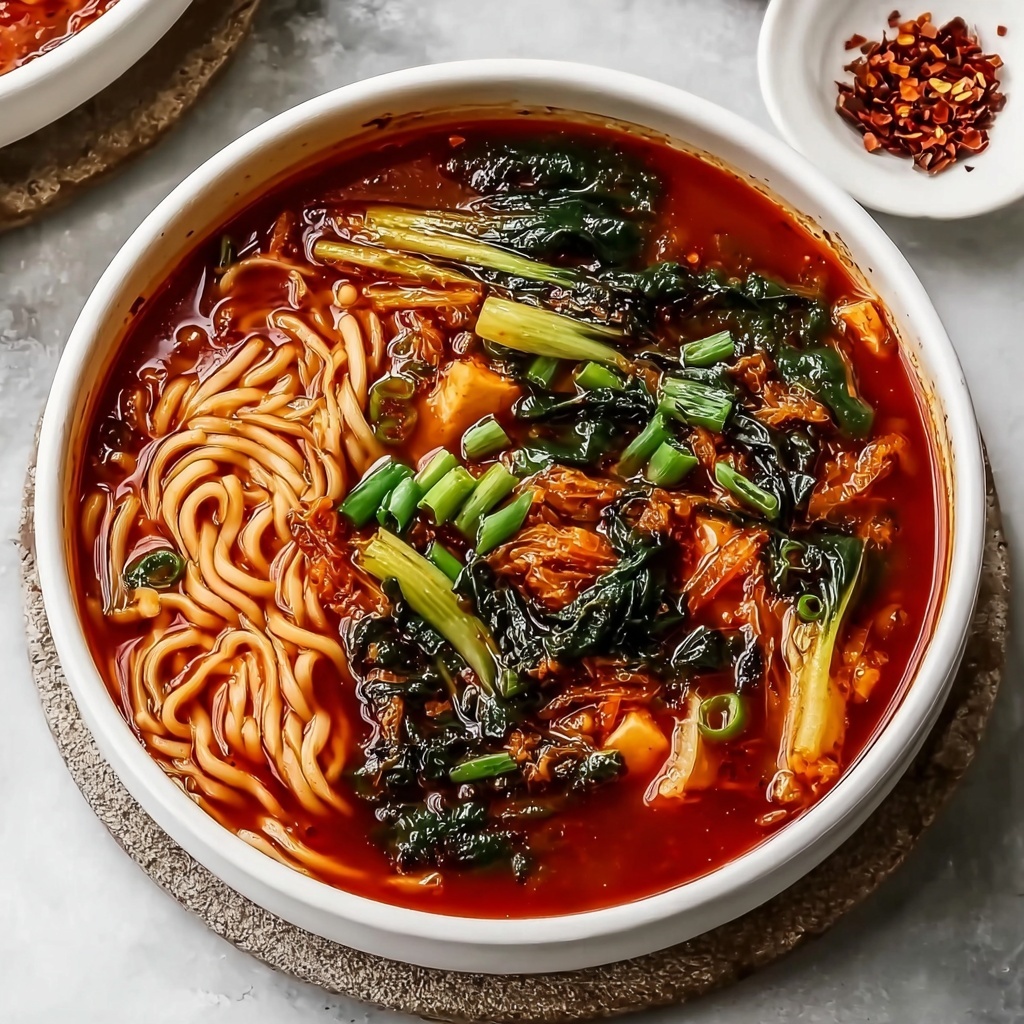
Top each steaming bowl with freshly sliced green onions and a sprinkle of toasted sesame seeds to introduce a fresh crunch and nutty finish. If you want to elevate your soup even more, add a soft-boiled egg—it melts into the broth and turns each spoonful into pure comfort.
Side Dishes
This soup pairs wonderfully with classic Korean sides like kimchi, pickled radishes, or a light cucumber salad. Their crunchy, tangy profiles complement the rich and spicy noodles perfectly, offering balance and contrast on your plate.
Creative Ways to Present
For a fun twist, serve the soup in individual stone bowls to keep it hot longer and add an authentic touch. You can also garnish with a handful of fresh herbs such as cilantro or a drizzle of chili oil for extra heat and visual appeal. Everyone loves little surprises in their bowls!
Make Ahead and Storage
Storing Leftovers
Keep leftover Spicy Korean Noodle Soup: An Amazing Ultimate Recipe refrigerated in an airtight container for up to 3 days. To prevent the noodles from becoming overly soggy, consider storing them separately and combining right before reheating and serving.
Freezing
This soup freezes well if you want to save some for later. Freeze the broth and cooked meat with vegetables in a freezer-safe container for up to 2 months. Avoid freezing the noodles since they tend to lose their texture upon thawing; add fresh noodles after reheating the soup instead.
Reheating
Reheat gently on the stovetop over low to medium heat, adding a splash of broth or water if it has thickened too much. Stir occasionally until warmed through. If storing noodles separately, reheat the broth first and stir cooked noodles in just before serving to keep everything deliciously tender.
FAQs
Can I make this soup vegetarian?
Absolutely! Substitute the pork or beef with extra mushrooms or firm tofu, and swap the anchovy or chicken broth for vegetable broth. This way, you still get the rich umami flavor without any meat.
How spicy is this soup?
The heat mainly comes from gochujang and gochugaru, which can be adjusted to your preference. If you want a milder bowl, reduce the amount of chili flakes and paste, or add a little extra sugar or broth to balance the spice.
What noodles work best?
Korean wheat noodles or udon noodles are ideal because of their chewy texture that holds up well in hot broth. If you can’t find them, thick egg noodles or ramen noodles make fine substitutes.
Can I prepare parts of this soup in advance?
Definitely! You can chop the vegetables and mince the garlic and ginger ahead of time. Cooking the broth base and meat a day before also saves time and deepens flavor.
What toppings are traditional?
Green onions, sesame seeds, and soft-boiled eggs are classic toppings for this spicy Korean noodle soup. Some like to add kimchi or a drizzle of chili oil to enhance flavor layers and texture.
Final Thoughts
There’s truly something magical about a steaming bowl of Spicy Korean Noodle Soup: An Amazing Ultimate Recipe. It’s bursting with bold yet balanced flavors, textures that delight, and enough warmth to chase away any cold day blues. Whether you’re a Korean food fan or new to this cuisine, this recipe is a must-try that will quickly become a cherished favorite. So grab your ingredients, get cooking, and enjoy every comforting spoonful!
Print
Spicy Korean Noodle Soup: An Amazing Ultimate Recipe
- Prep Time: 15 minutes
- Cook Time: 20 minutes
- Total Time: 35 minutes
- Yield: 4 servings
- Category: Soup
- Method: Stovetop
- Cuisine: Korean
- Diet: Dairy-Free
Description
This Spicy Korean Noodle Soup is a comforting and flavorful dish featuring Korean wheat noodles simmered in a spicy, savory broth enriched with gochujang chili paste and gochugaru flakes. Tender pork belly or thinly sliced beef is cooked with fresh vegetables like napa cabbage, zucchini, and mushrooms, then combined with aromatic garlic and ginger for a rich depth of flavor. Garnished with green onions, toasted sesame seeds, and an optional soft-boiled egg, this soup delivers a perfect balance of heat, umami, and heartiness, making it an ultimate Korean comfort food ideal for any meal.
Ingredients
Protein & Noodles
- 8 ounces Korean wheat noodles or udon noodles
- 6 ounces pork belly or thinly sliced beef
- 1 soft-boiled egg per serving (optional)
Vegetables & Aromatics
- 1/2 medium onion, sliced
- 1 cup napa cabbage, chopped
- 1/2 cup zucchini, sliced
- 1/2 cup mushrooms, sliced
- 3 cloves garlic, minced
- 1 tablespoon fresh ginger, minced
- 2 green onions, sliced
Oils & Seasonings
- 1 tablespoon sesame oil
- 1 tablespoon vegetable oil
- 2 tablespoons gochujang (Korean chili paste)
- 1 teaspoon gochugaru (Korean chili flakes)
- 1 tablespoon soy sauce
- 1 teaspoon sugar
- 1/2 teaspoon black pepper
- 1 teaspoon sesame seeds
Broth
- 6 cups anchovy or chicken broth
Instructions
- Cook noodles: Prepare the Korean wheat or udon noodles according to package instructions, then drain and set aside.
- Sauté meat: Heat the sesame oil and vegetable oil together in a large pot over medium heat. Add the pork belly or beef and cook until lightly browned and cooked through.
- Cook vegetables: Add the sliced onion, chopped napa cabbage, sliced zucchini, and sliced mushrooms to the pot. Sauté for 3 to 4 minutes until the vegetables soften slightly.
- Add aromatics: Stir in the minced garlic and ginger, cooking for about 30 seconds until fragrant.
- Incorporate chili paste and flakes: Add the gochujang and gochugaru chili flakes, stirring well to evenly coat the ingredients and develop the soup’s signature spicy flavor.
- Add broth and seasonings: Pour in the anchovy or chicken broth, then add soy sauce, sugar, and black pepper. Bring the mixture to a boil.
- Simmer soup: Reduce the heat and let the soup simmer for 10 minutes to allow flavors to meld.
- Add noodles: Add the cooked noodles to the pot and simmer for an additional 2 to 3 minutes to warm through and absorb some broth flavor.
- Adjust seasoning and serve: Taste and adjust seasoning as needed. Ladle the soup into bowls and garnish each with sliced green onions, sesame seeds, and a soft-boiled egg if desired. Serve hot.
Notes
- For a vegetarian version, substitute the meat with tofu or extra mushrooms and use vegetable broth instead of anchovy or chicken broth.
- Adjust the spice level by increasing or decreasing the amount of gochugaru chili flakes according to your heat preference.
- Soft-boiled egg is optional but adds richness and texture to the soup.
- Use fresh vegetables and good quality broth to maximize depth of flavor.