Description
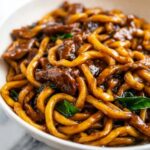
This Three Cup Chicken Noodles recipe is a delicious fusion twist combining the rich, savory flavors of the classic Taiwanese three cup chicken with hearty udon noodles. Tender chicken thighs are cooked in a flavorful sauce of Chinese cooking wine, soy sauces, brown sugar, and sesame oil, then tossed with aromatic ginger, garlic, and fresh Thai basil served over chewy udon noodles for a satisfying meal in under 30 minutes.
Ingredients
Scale
Sauce and Seasonings
- 3 tbsp Chinese cooking wine
- 2 tbsp all-purpose soy sauce
- 1 tbsp dark soy sauce
- 1 tbsp brown sugar
- 1 tbsp sesame oil
Chicken and Aromatics
- 2 tbsp oil (vegetable or canola oil)
- 500 g (1 lb 2 oz) boneless, skinless chicken thighs, cut into bite-sized pieces
- 1 tbsp freshly minced ginger
- 1 tbsp freshly minced garlic
Noodles and Herbs
- 450 g (1 lb) udon noodles, prepared according to package instructions
- 2 firmly packed cups (100 g) Thai basil leaves
Instructions
- Prepare noodles: Cook the udon noodles according to the package instructions, usually by boiling them until just tender. Drain and set aside while you prepare the chicken.
- Mix sauce: In a small bowl, combine the Chinese cooking wine, all-purpose soy sauce, dark soy sauce, brown sugar, and sesame oil. Stir until the sugar dissolves and set aside.
- Cook chicken: Heat 2 tablespoons of oil in a large skillet or wok over medium-high heat. Add the bite-sized chicken pieces and cook for about 5-7 minutes until browned and nearly cooked through, stirring occasionally.
- Add aromatics: Add the freshly minced ginger and garlic to the skillet with the chicken. Stir-fry for about 1-2 minutes until fragrant but not burnt.
- Add sauce: Pour the prepared sauce mixture over the chicken and aromatics. Stir well to coat the chicken. Let it simmer for 3-4 minutes, allowing the sauce to thicken slightly and the chicken to finish cooking.
- Toss noodles and basil: Add the cooked udon noodles and Thai basil leaves directly into the skillet. Toss everything together gently until the noodles are evenly coated with the sauce and the basil is wilted but still vibrant.
- Serve: Remove from heat and serve immediately while hot, garnished with additional basil if desired.
Notes
- Ensure the udon noodles are cooked al dente to avoid sogginess after tossing with the sauce.
- If Thai basil is unavailable, sweet basil can be substituted, though the flavor profile will differ slightly.
- This dish is best enjoyed immediately as the basil loses its freshness over time.
- You can adjust the sweetness or saltiness of the sauce by varying the amount of brown sugar or soy sauces to suit your taste preferences.